 WALKSCAPE
 Crosswave Edition
Why Everyone Stops at the Signs in Dōtonbori
2026-11-13
Stand on Ebisu Bridge in Dōtonbori and the runner across the canal is directly in front of you. People raise both arms as someone takes their picture. Step off the bridge into the shopping street and a crab and a dragon jutting out of the walls catch your eye next. One sign gives visitors a pose to copy. The others tell people something about the shops before they get there. On the same Osaka street, advertising does two different jobs.
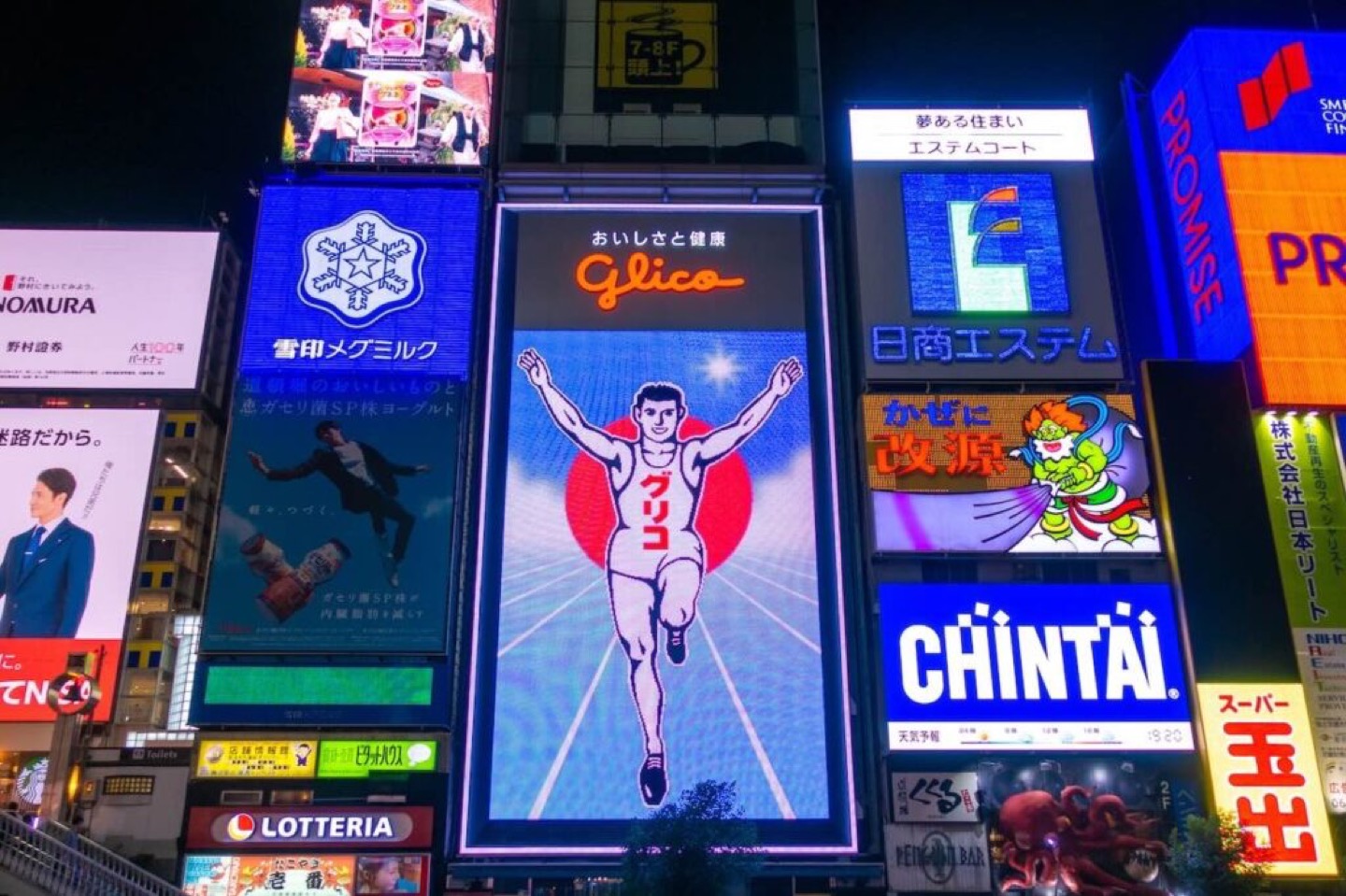
Why the Signs Look Different From the Bridge
From the bridge, the Glico runner and several other advertisements fit into a single view across the water. In the shopping street, you pass right under the buildings. The legs of a giant crab or a dragon projecting from a wall catch your eye before flat lettering does. The runner draws your gaze across the canal. The shop signs can decide where you take your next few steps.
Six Versions of the Runner in the Same Spot
Ezaki Glico dates the first sign to 1935 and the present, sixth version to October 2014. The lighting and background have changed, but the runner still raises both arms as if crossing a finish line. For someone taking a photograph, the gesture is easier to copy than an advertising slogan is to read and interpret.
The Glico sign gives the person in front of the camera something to do. For a moment, the visitor performs the scene. Most billboards try to hold your gaze. This one gives you a gesture, which helped turn it first into a photo spot and then into a destination in its own right.
Even first-time visitors often know what to do without being told. The pose has already appeared in countless photos online and in the media. Visitors arrive knowing the scene and then make their own version of it. The experience begins with an image, long before they step onto the bridge.
Its position matters. The canal opens up the view, so the opposite bank and the signs fit into the same frame. From the bridge it is easy to include both the runner and the person posing. A sign that has stood in one spot for decades, in a place that makes it easy to photograph, can become another name for the spot itself.
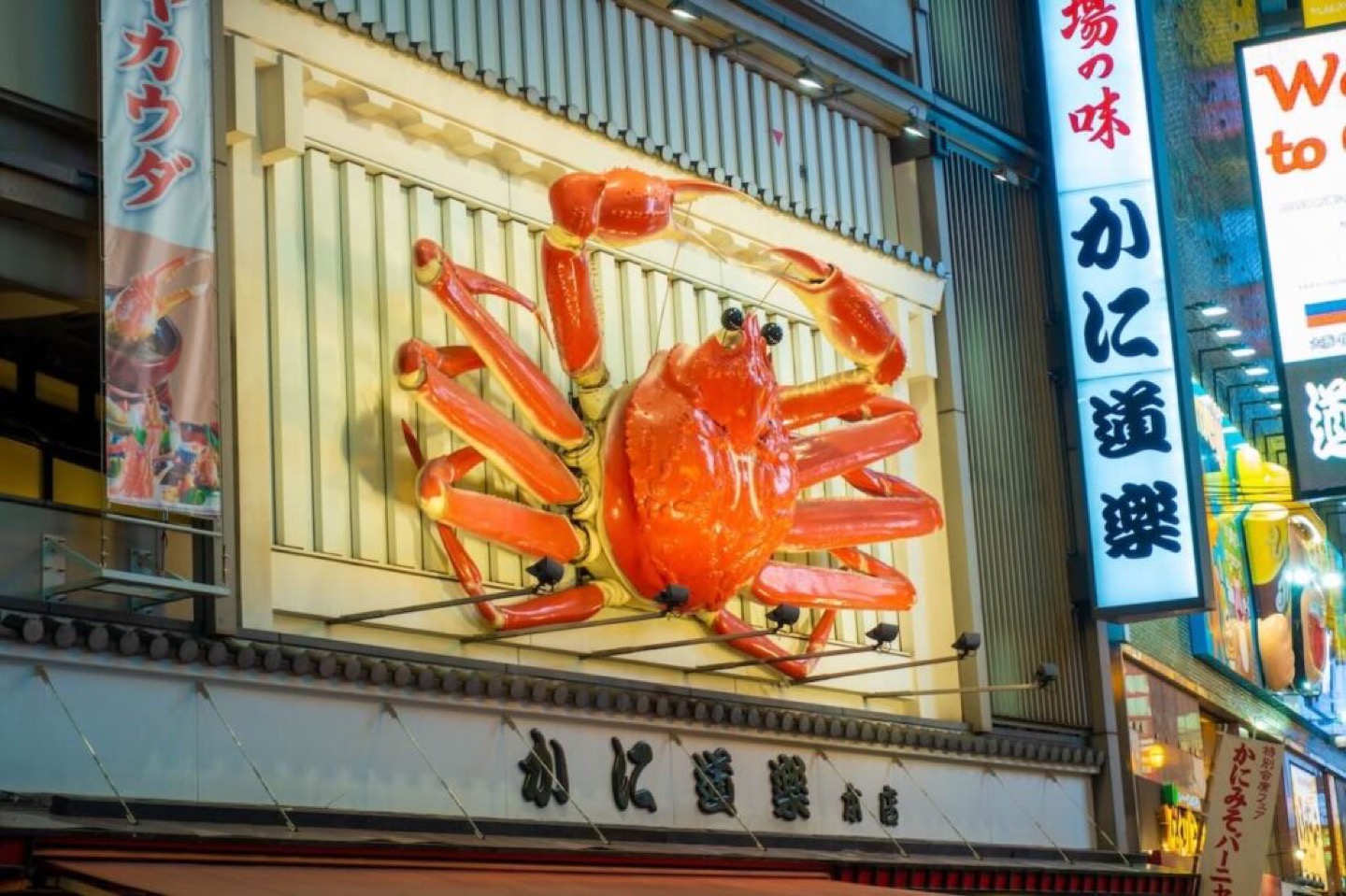
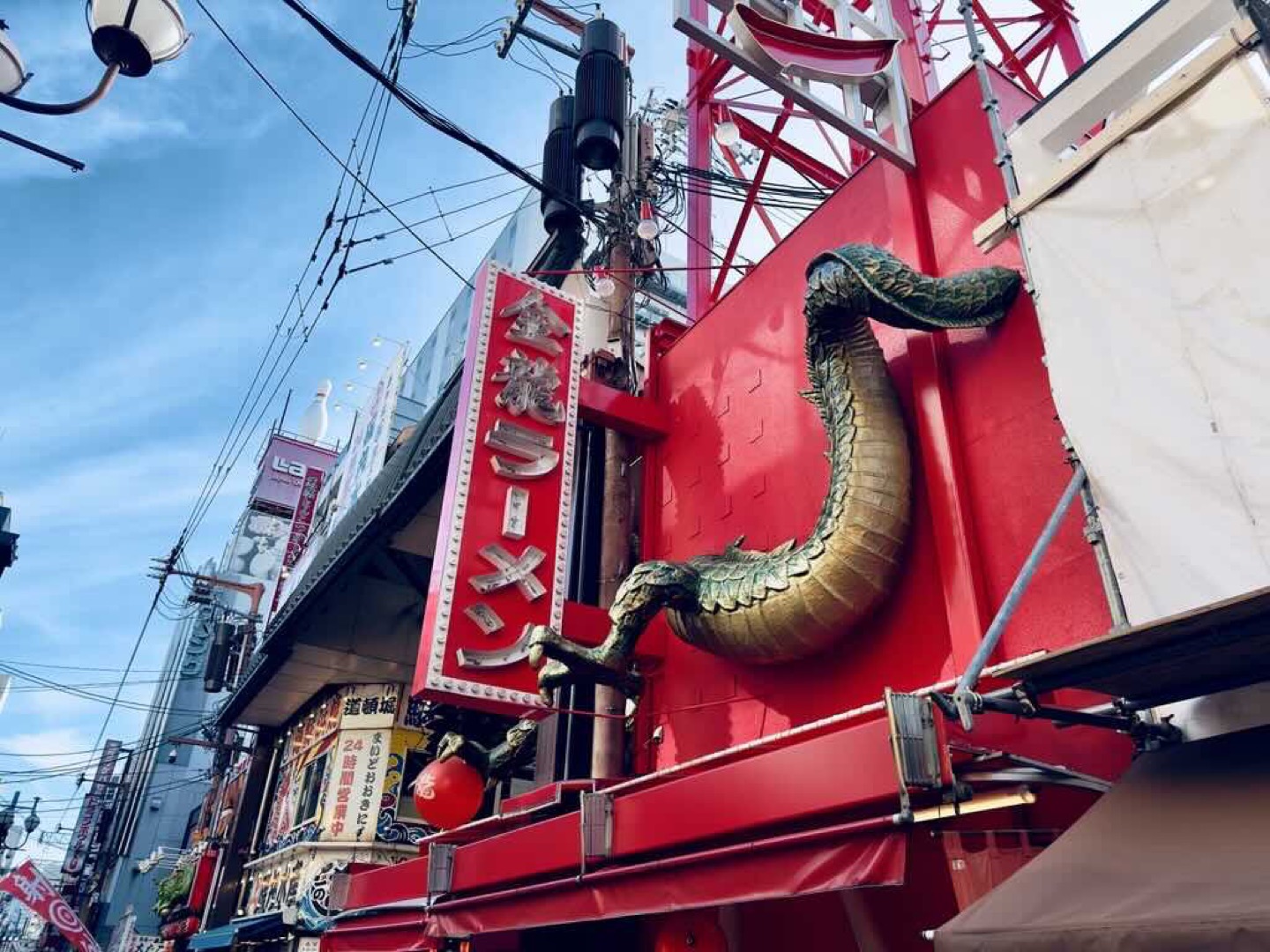
Seeing the Menu Before Reading the Name
The crab outside a specialist restaurant tells you what is served even if you cannot read Japanese. The dragon at Kinryū Ramen is closer to an emblem for the shop than a literal picture of the menu. One sign points to an ingredient and the other makes a brand recognizable. That difference is more revealing than the size of either sign.
Where the Menu Sticks Out of the Wall
The distance between you and the signs shrinks as you enter the shopping street. In place of the flat image across the water, three-dimensional shapes prompt you to look up from right below. You see the crab before you can read the restaurant name. The dragon distinguishes the ramen shop from its neighbors. A large object can communicate the kind of shop and give people something to remember it by.
Taking the photograph is a personal experience that also feels like a shared ritual. Strangers take pictures for one another and make the same pose. For that moment, they are helping to reproduce a scene the city is known for. The setting prompts a specific action.
The Composition Visitors Already Know
At the Glico sign, newcomers often know where to stand and how to pose. The railing, the water and the runner’s raised arms recur in photographs taken by earlier visitors. There is less time spent choosing a background. What changes from photograph to photograph is the light and the faces of the people who came with you.
How One Photograph Leads to Another Visit
In photographs of Dōtonbori, the street on the way to dinner can be more memorable than dinner itself. Visitors use the signs to recognize a location, then stand where someone else stood for a photograph. The Glico sign became part of the cityscape through an accumulation of such encounters with an advertisement that stayed in place.
A place can become a destination without a historic building or a heritage designation. People return, make the same gesture and share versions of the same view. The Glico runner is an unusually clear example of how that happens.
The Signs of Dōtonbori
- Location
- Around Ebisu Bridge, Dōtonbori, Osaka
- Official history
- Ezaki Glico’s history of the Dōtonbori sign