 WALKSCAPE
 Crosswave Edition
Kingdoms — Place Your Tiles Quietly and Let the Score Speak
2026-02-08
A title with “kingdom” in it can make you wary. Will the rules be complicated? Will the setup take forever? Will you lose interest halfway through the explanation? Kingdoms defies those expectations. The setting has castles and kingdoms, but what it asks of you is simple. Place your pieces quietly, and leave the arithmetic until the end of the round. The longer the silence lasts, the more tension builds at the table.
I first played it in a café near Daehangno. We took over a table, set our coffees to one side and unfolded the board. It wasn’t a board game café or a particularly elaborate setup, but the game felt at home there. It plays quietly, and you find yourself paying close attention to everyone else’s hands and where they are looking.
One Goal — Build the Richest Kingdom
The aim in Kingdoms is straightforward. Build the richest kingdom.
There’s no military victory or culture track. After three rounds, whoever has the most gold wins. New players pick up the goal quickly. The hard part is how to make the money.
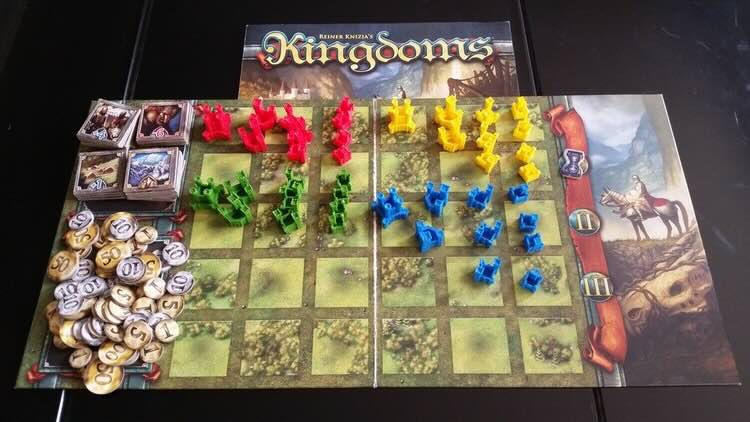
The board is a six-by-five grid with 30 spaces. Fill it three times and the game is over. On each turn, a player can place a castle, draw and place a tile, or play the tile they received at the start of the round. There are few moves to learn, but where and when you make them can change the outcome dramatically.
Castles Are Investments, Tiles Set the Mood
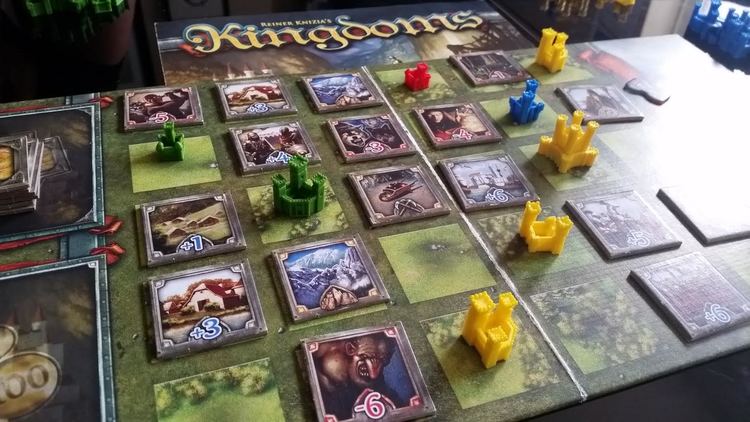
What makes Kingdoms work is the relationship between castles and tiles. A castle’s rank determines its multiplier. In a good spot that can mean a handsome return. Put the same castle in a row or column with a negative total and the loss can be just as large. Every tile changes the numbers on the board, and nobody knows exactly where the next one will land.
It pays to read the table. A spot that looks promising now may become a liability by the end of the round. That day, one player put down a high-ranking castle early and looked pleased with the move until the score was tallied. Another kept retrieving level-one castles and quietly held on until the later rounds. You could see whose patience had paid off.
Quiet Moves, Ruthless Scoring
Kingdoms doesn’t generate much table talk as you play. Players don’t attack each other openly. Once the round ends and you start adding the positive and negative numbers, the mood changes. Every new sum seems to draw another groan.
The rule that stayed with me was how few decisions you can undo. Only level-one castles can be retrieved. Once you place a level-two, three or four castle, you’ve committed it. A move that seems casual at the time can cost you dearly. When we finished scoring the last round in the café, the first thing anyone wanted was another game.
Medieval Fantasy at a Café Table
Kingdoms may be better suited to an ordinary café than to a dedicated board game venue. Nobody needs to shout or move quickly. You watch what the others choose and keep an eye on the whole board. There’s plenty of time to drink your coffee, even as your mind keeps racing.
The medieval setting gives the board its look. The decisions come down to investment, timing and knowing when you have enough. At the end of a round, there is always a move you want to revisit. Why did I put that there?
Simple Rules, a Game You Remember
Kingdoms takes little time to explain, yet each choice carries weight and the consequences arrive all at once. I can still remember that tension around the café table near Daehangno.
Play quietly, and see who gets to laugh when the last score is in. That’s Kingdoms.
Game Information
Kingdoms
- Players
- 2–4
- Playing time
- About 45–60 minutes
- Genre
- Strategy / Tile placement / Economy
- What to expect
- Simple turns, punishing scoring and a tense finish