 WALKSCAPE
 Crosswave Edition
Warhammer: Invasion — A War Played Out in Cards
2025-12-29
The name Warhammer usually brings a few images to mind: miniatures, paint and a world that seems to go on forever. Games Workshop’s British wargame series began with miniatures. Its setting was broad enough to grow into card games, board games and video games. Warhammer: Invasion brings that world to a deck of cards.
It is a Living Card Game, or LCG. The cards drive combat, generate resources and change the course of a battle. It sounds complicated, but after a few turns the objective is clear: burn two of the three zones in your opponent’s capital. What happens on the way to that result is where the complexity lies.
The First Board-Game Night
We first brought it out on Thursday evening, February 28. A friend hoping to work in the game industry had come back to Seoul after the break, and we made a simple agreement: play a board game once a week. That was the start of board-game night. There were only two of us for the first one, so Warhammer went on the table.
We met near the main gate of Sungkyunkwan University, at Dive Dice in Daehangno. It was familiar to local board gamers as a place where you could sit down and play without buying a game. It had been a while since I had sat across from someone to play. Perhaps that was why we took the first match so seriously.
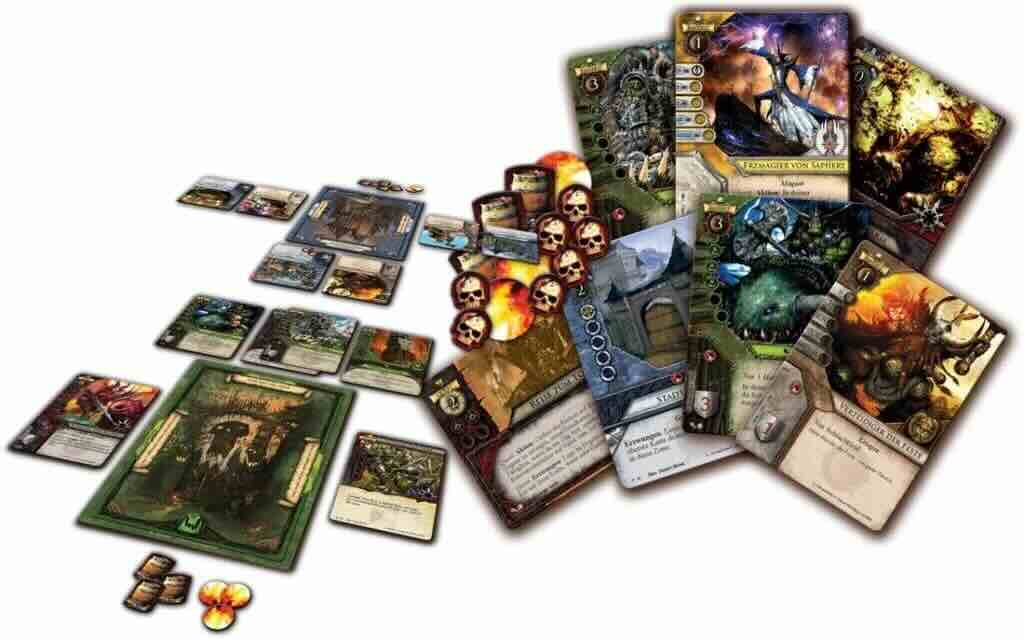
The Empire and Chaos Meet on the Table
The sides were set: the Empire against Chaos. It is a familiar conflict from the Warhammer setting, with two distinct play styles. The Empire can hold its ground and keep its forces going. Chaos favours early aggression and pressure. In StarCraft terms, think of the Empire as a sturdy Terran force and Chaos as a Protoss army going on the offensive.
We played about four matches. Chaos applied plenty of pressure in the opening turns of most of them. In one, the Empire’s battlefield zone was burned early and the match looked all but lost. Only the kingdom and quest zones remained. I could do little but spread the units between them and hold out one turn at a time.
When a Card Game Starts to Feel Like an RTS
The draw is only the beginning. Which zone do you put a unit in? Where do you spend your resources? Is this the turn to attack, or do you have to hold on for another? Those decisions can bring back the feeling of a real-time strategy game on a PC, when you know the line cannot give way.
The Empire’s units are often less powerful in attack, but can move or defend well. At first it can feel as if all you do is take hits. Hang on and there may be a chance to counterattack. One of our matches looked over until a hero unit and a series of spells turned it around. It was quite a thing to watch happen with cards.
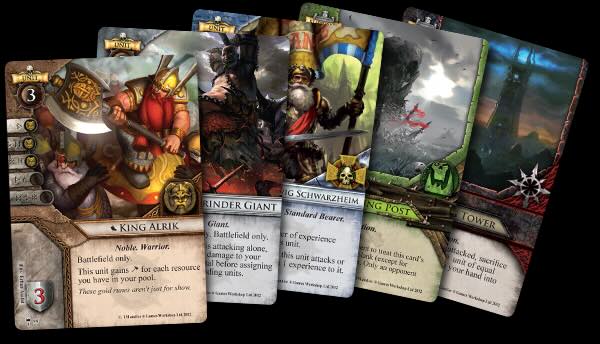
What Stays with You After the Battle
The Empire won that match from behind. It held on after losing the battlefield, then burned two of the enemy zones in quick succession. There were only cards on the table, yet it felt like a war. The first thing I said afterward was that we had fought it well.
It takes time to learn the cards and understand what each faction does. For anyone who likes wargames and strategy games, that density and tension are part of the draw. There is something unusual about sitting across from one person and watching a front line move back and forth at this pace.
A Good Game to Start the Evening, and the Habit
From that night on, Thursday became board-game night. I don’t know how long it will last, but it began well. Warhammer: Invasion is the game I will remember as the start of it.
There is a pleasure here that is different from playing alone in front of a computer. You face another person and watch each card take on a meaning of its own. Warhammer: Invasion brought that feeling back.
Game Information
Warhammer: Invasion
- Players
- 2
- Playing time
- About 60–90 minutes
- Genre
- Strategy / Card wargame / Head-to-head
- What to expect
- A deep setting, faction-specific tactics and a war played with cards