 WALKSCAPE
 Crosswave Edition
Civilization — Once You Start, Time Only Moves Forward
2025-12-28
“You’ve been Civilized.”
If that makes you nod, you have probably lost an evening to Civilization. Sid Meier’s PC game earned its reputation as a time machine. You sit down for a few turns, then look up to find that several eras have passed and so has the evening.
The board game brings that habit to the table. It came out in 2010 and received a Korean edition in 2011. A game once played alone at a monitor can now put two to four people around the same map. The price of that change is real: there is a substantial setup and a rulebook to learn.

The PC Game in a Smaller Space, Still Recognisably Civilization
The board game compresses the original. There are fewer turns and more compact systems. A few turns in, though, you find yourself thinking:
“Yes, this is Civilization.”
Cities go up, technologies develop, and culture, money and military plans pull you in different directions. The map changes size with the number of players. Turning over unexplored tiles brings across the sense of discovering a world. The rulebook takes work at first, but the second game goes much more easily. What you learn the first time keeps paying off.
Civilization at Board-Game Night
We first brought it out at our regular Thursday evening board-game night, on the third week. It was White Day, and the people who had planned to come dropped out while somebody else joined unexpectedly. We ended up with three players.
We were at Dive Dice in Daehangno, a place where you could sit down and play without buying a game and had more room to choose if you did. It was a good place to spread out a game this large. We set up for two first, then had to redo the whole map for three. By then I knew:
We were going to be here a while.
Choosing a Civilization Is Already a Move
Your choice of civilization begins to shape how you will play. Egypt, Rome and China are familiar choices, and the wider line-up includes more martial possibilities such as Japan, Mongolia and the Zulu. That night I chose India and played on the old Civilization joke about an unexpectedly warlike Gandhi. This Gandhi did very little negotiating. He just narrowed the options.
“Hand over the gold peacefully and there will be no bloodshed.”
Before we started, I put on “Baba Yetu,” one of the pieces of music associated with the PC series. That small touch changed the mood at the table. It felt like the beginning of an evening, not just the beginning of a ruleset.
Four Ways to Win, Four Ways to Tell the Story
You can win through culture, technology, economics or conquest. The game ends when any one of those goals is reached, but all four take work.
- A cultural win takes time,
- a technology win takes careful preparation,
- an economic win tests your patience,
- and a military win means accepting what it may do to your diplomacy.
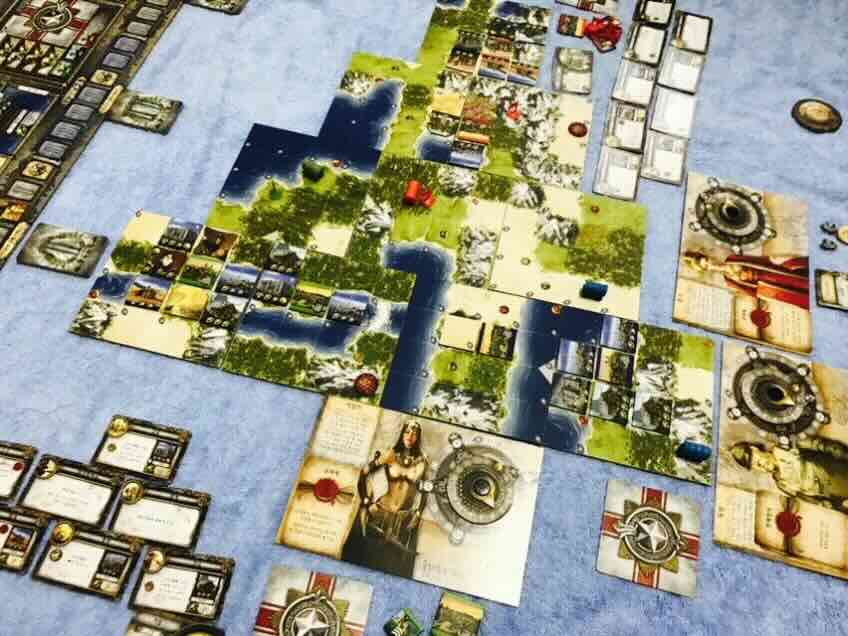
That is why one game can look so different from the next. The same civilization can play out in different ways depending on the people at the table. One player develops quietly and wins. Another commits everything in the last turn and goes for a capital.
Stopping Just When It Gets Interesting
We never finished the first game. Armies had just started moving and the resources were beginning to add up when we ran out of time. A board game does not save and reload easily, so we agreed to start again the next week.
That is the hold Civilization has on you. The disappointment of stopping makes you want another game.
History Starts Again a Week Later
By the fourth board-game night, we had made it a month without missing a week. Three players again, and Civilization again. The unfinished game had been on our minds.
I took India again, against Spain and Germany. The map began unrevealed. Sending out armies and settlers and turning over tiles brought back the exploration of the PC version. Atlantis appeared, along with terrain that favoured sailing. After a fight with barbarians, I even came away with uranium.
It was going reasonably well. As usual, the problem was timing.
Civilization Remembers Your Mistakes
I was still learning when to attack and in what order to research technologies. I realised too late that I should have been building more. Early on, I had turned out troops and done little else. It was like putting up three barracks in StarCraft and never sending an army out.
I tried to catch up in technology, build wonders and store resources, but Germany already had the momentum. A technology victory was due the next turn. I made one last attempt with an artillery-heavy force. History had already been decided.
Why This One Feels Like the Final Boss
The board game can end sooner than you expect. You think you have reached the middle and someone wins. It is easy to imagine an experienced table finishing even faster. That is a large part of what makes the game daunting.
At my computer I was used to playing alone. Around the board, people trade, check each other’s plans and change when they want to research a technology based on what others are doing. Decisions I once talked through to myself became conversations.
So the game keeps going in your head after it ends.
“I should have done that a turn earlier.”
A Game Strategy Players Are Likely to Meet
It is a lot to ask of someone who wants a short party game. For someone who likes strategy and wants to keep questioning whether a plan is working right up to the end, it is a game worth knowing.
The outcome depends on what you did with your choices. That is why Civilization still feels like itself at a table.
Game Information
Sid Meier’s Civilization: The Board Game
- Players
- 2–4
- Playing time
- About 120 minutes (allow 3–4 hours for a first game)
- Suggested audience
- Teenagers and older players familiar with strategy games
- View the game on Coupang
- https://coupa.ng/cbxGhf