 WALKSCAPE
 Crosswave Edition
Momguk, the Jeju Soup That Brings Sea and Land Together
2026-01-22
A Jeju soup made with sargassum
Momguk is one of Jeju’s traditional dishes. It can be unfamiliar to visitors, but it belongs to the island’s everyday cooking as much as to ancestral rites and wedding feasts. The name means a soup made with mom.
In the Jeju dialect, mom means sargassum, a seaweed found off the island’s rocky, wave-washed coast. It has a distinctive aroma and texture, and you may also see the soup called mojabanguk, after the Korean name for the seaweed.
A Broth from Sea and Land
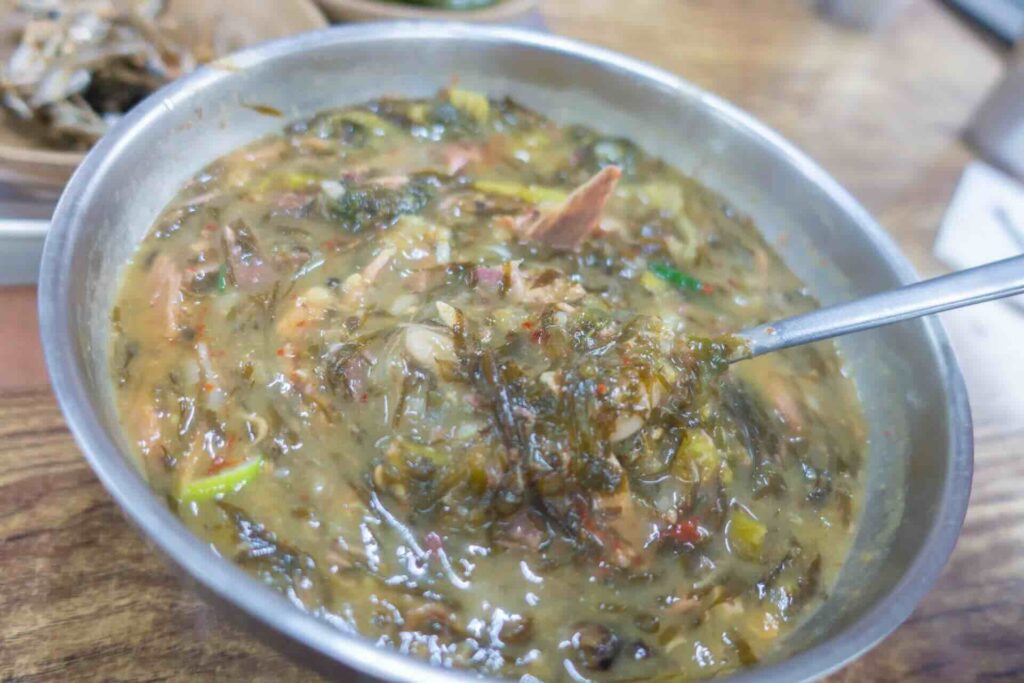
What defines the dish is the way it cooks seaweed and pork together. The pork gives the broth body. The sargassum keeps a trace of the coast in it, even as the richness of the meat comes through.
Pork once mattered especially on days when people gathered to celebrate or pay respects. Momguk was also made for occasions that brought people together. A bowl carries some memory of how those meals were shared.
Why the Broth Is Thick
Buckwheat flour gives momguk enough body to carry pieces of the ingredients in every spoonful. A bowl makes a full meal. There is something of Jeju’s practical home cooking in a soup thick enough to make a meal.
in that thickness.
The taste is gentle and deep. Pork rounds out the scent of the seaweed, and kimchi, garlic and scallions add interest without overwhelming it.
A Different Recipe in Every House
- No single recipe can stand for every Jeju household or village. This is one traditional approach.
- Simmer pork to make a stock.
- Add a large scallion to flavour the stock.
- Rinse the sargassum several times to remove excess salt and grit, then chop it.
- Take out the scallion. Add chopped pork stomach, kimchi and scallion, and simmer for about 20 minutes. Add the chopped sargassum.
- Season with a little minced garlic and two tablespoons of soy sauce.
Stir in buckwheat flour mixed with water to thicken the broth. There is some work in the preparation. That makes it feel very much like home cooking,
and a big pot lends itself to sharing.
Eating It on the Island There are Jeju-style restaurants in Seoul, some of them serving momguk. I still think a local dish makes more sense
in the place it comes from.
On Jeju, many of the places serving it are simple dining rooms where residents drop in. Sitting down to a bowl there can give you a little time to catch your breath between other stops. Prices have risen, but next to some of the island’s better-known meals, a bowl can still be relatively affordable.
A Jeju Breakfast
Momguk makes an especially good breakfast. It’s warm and filling without being sharp or heavy on the stomach. The seaweed is soft and the buckwheat gives a bowl enough substance to start the day.
Whenever I visit Jeju, I try to have it one morning. A meal with something of the local routine in it often stays with me longer than the showier things I eat on a trip.
Another Way to Understand Jeju
Momguk can seem unfamiliar until you know something of the island’s habits. Then the soup begins to explain something about how people there lived and shared food.
Jeju’s black pork and seafood deserve their reputation. Make room for a bowl of momguk, too. The sea, the land and the work of feeding people are all there in the broth.