 WALKSCAPE
 Crosswave Edition
Moju, Jeonju’s Gentle Morning Drink
2026-01-21
Moju is a cloudy rice-wine drink made from makgeolli, usually with about 1 percent alcohol by volume. In Jeonju, people think of it as something warm and soothing to drink with a meal.
With so little alcohol, it occupies an unusual place among Korean drinks. In Jeonju, it fits into the rhythm of an ordinary morning, including the traditional breakfast after a night of drinking.
Somewhere Between Sujeonggwa and Makgeolli
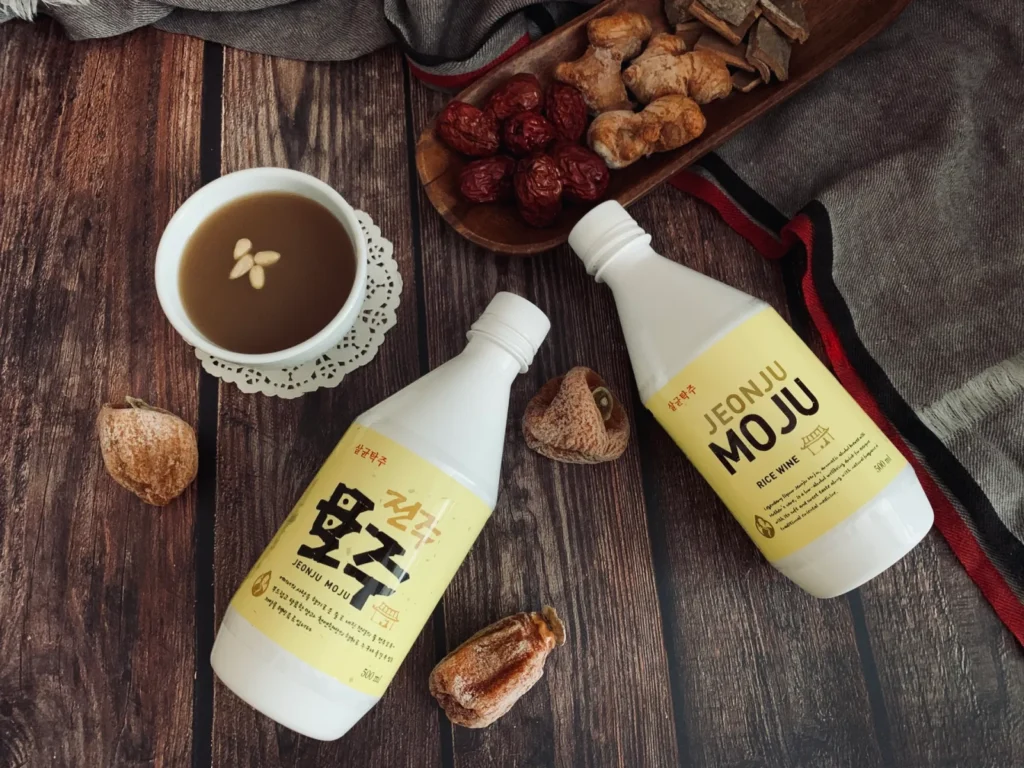
Jeonju’s moju is simmered with spices and aromatics such as jujubes, ginger and cinnamon. The deep brown colour and fragrance recall sujeonggwa, the sweet Korean cinnamon punch. Take a sip and the grain and fermentation of the makgeolli are still discernible.
Each shop makes it a little differently. The amount of brown sugar, the balance of cinnamon and ginger and when the jujubes go in all affect the result. One version is mellow and sweet, another tastes more strongly of medicinal herbs. That variation gives you a reason to try moju more than once in Jeonju.
How It Became “Mother’s Wine”
The first character in moju, 母, means “mother.” Several stories are told about where the name came from.
The most familiar tells of a mother who worried about her son’s drinking and made a weak brew with medicinal herbs. Sweet and fragrant, it carries her care in its name.
Another story involves Lady Noh of the Gwangsan clan, the mother of Queen Dowager Inmok. In this telling, Lady Noh sold the drink to make ends meet after her daughter was sent into exile. It was called “the queen dowager’s mother’s wine” before the name was shortened to moju.
Another account starts with the lees left after straining clear rice wine. One extraction made makgeolli. What remained was simmered into moju. In each story, the drink comes from thrift or care, and from the practical knowledge of the household.
When Moju Is Almost a Soup
Moju is sometimes served hot. In some households, the same name is given to a hot preparation made by simmering lees with water and other ingredients. The result can be closer to something you’d eat with a spoon than the moju served in a cup.
That range, from drink to dish, is part of what makes moju distinctive.
Making Jeonju Moju at Home
The method is simple enough to try in a home kitchen. Older Jeonju residents remember each family having its own version.
Main Ingredients
- 1–2 kg rice-wine lees or 1.5 L makgeolli
- 2–3 tbsp fruit syrup
- Cinnamon, liquorice root, jujubes and brown sugar
Optional Ingredients
- Omija berries, kudzu root and ginger
Method
If starting with lees, mix them with an equal amount of water and leave to ferment for about two days. Skip this step if using makgeolli. Strain, add the spices and sweetener and simmer for about 40 minutes. Adjust with brown sugar and cool.
There’s something about the method that recalls making a spiced tea on the stove. It’s easy to see why moju found a place at home.
Bean Sprout Soup and Moju for Breakfast
In Jeonju, moju goes hand in hand with kongnamul gukbap, bean sprout soup with rice. The morning after drinking, people traditionally had a bowl with a small cup of hot moju alongside. Its warmth and sweet spice are the appeal.
That is why moju appears on so many kongnamul gukbap menus in Jeonju. The pairing also turns up at restaurants elsewhere that specialise in Jeonju-style soup.
Why Drink It in Jeonju?
There’s still something particular about drinking moju in Jeonju itself. A cup set beside a steaming bowl in a backstreet soup shop makes the pairing complete in a way the recipe alone cannot.
Moju suits a city where one can sit a little longer over an everyday meal. It’s a drink to linger over. That’s as good a reason as any to try it in Jeonju.