 WALKSCAPE
 Crosswave Edition
Kitty Genovese and the Story We Tell About Bystanders
2026-01-16
What happened to the story of the silent witnesses?
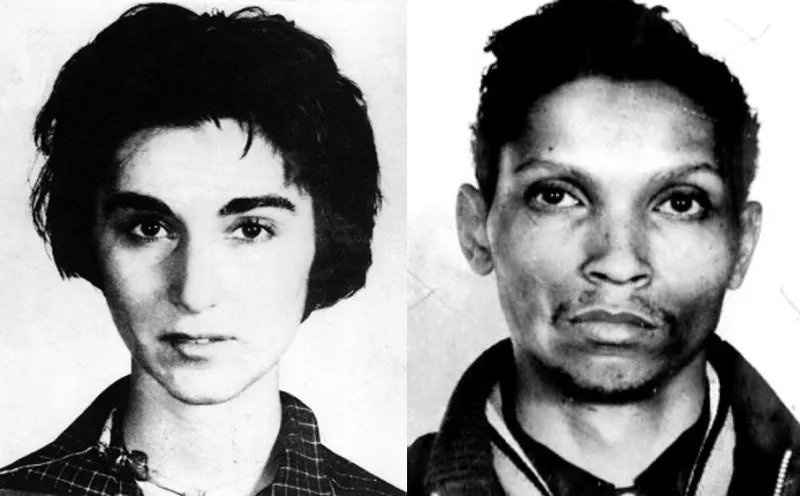
Early on March 13, 1964, 28-year-old Kitty Genovese was attacked and killed near her home in Kew Gardens, Queens. A New York Times story soon presented the murder as the case of 38 witnesses who failed to act. The claim about the neighbors quickly became almost as well known as the crime itself.
The story seemed to offer a bleak picture of city life: people at their windows, close enough to help, and a silence that no one broke. That version has not held up. The question it prompted is still worth asking. What does the presence of other people do to your sense that you should be the one to act?
The question Darley and Latané asked
Social psychologists John Darley and Bibb Latané set up experiments that changed what participants believed other people knew about an emergency. That let them test an aspect of the situation rather than speculate about what the neighbors had been thinking.
In one 1968 study, participants heard what they believed was a seizure over an intercom. Participants who thought they were the sole listener reported the emergency sooner and more often than those who believed several others were listening.
The researchers called this diffusion of responsibility. When you believe others have heard the same thing, it is easier to assume someone else will make the call.
From the laboratory to the street
The Korean broadcaster EBS explored that question in its documentary The Two Faces of Human Nature. Its three demonstrations moved from a staged emergency in a room to a small request for help in the street. They illustrate the idea at different scales.
In one EBS scenario, five participants worked on separate tasks when the person administering the test appeared to collapse out of sight. The demonstration showed people continuing with the task when others might also have heard the call for help.
In the second scenario, a person heard the same incident alone. The contrast in the program helps show what changes when there is nobody else to assume will respond.
The third moved onto the street. A person dropped books and the camera followed how passersby reacted. It was a television demonstration of a possible group effect in an everyday situation. The result does not provide a general probability of being helped in a crowd.

Make the request specific
One practical response is to ask a particular person for a particular action. In an emergency, “You in the black jacket, call the police” gives somebody a task they know is theirs.
You can also take on one concrete action yourself, such as calling emergency services from a safe position. A visible first response can make it clearer to everyone else that help is needed.
What the Genovese case actually shows
The murder was later examined against court records and other accounts. Manning, Levine and Collins concluded that the famous account of 38 inactive eyewitnesses was unsupported. Neighbors had different views of the scene, and hearing an unexplained disturbance was different from seeing an attack.
There is evidence that neighbors did respond. One shouted from a window during the first attack. Genovese’s neighbor Sophia Farrar went outside and stayed with her. Accounts differ on details of calls to police, and the familiar claim that nobody called should never be treated as established fact.
The attack unfolded in more than one location and there is no evidence that 38 people saw it all. That distinction matters because the later parable flattened several different moments into one and treated people with partial information as witnesses to the entire crime.
What the bystander effect can still explain
The historical correction leaves the experiments intact. The presence of other people can change an individual’s likelihood of acting in some situations. The size and even direction of that change depend on what kind of event it is and how much the bystanders know.
A study of 219 public conflicts across three countries found at least one bystander helped in roughly nine cases out of ten. An individual can be slower to act when others are present while the group as a whole still supplies someone who helps.
What you can do when you are there
In a crowd, it is easy to wait for someone else to define what is happening. A call for help or a specific request can make the situation clearer.
The research gives us a way to recognize the moment when responsibility feels vague and decide what we can do.
The next time you find yourself thinking that someone will probably act, consider which part of the response you can safely take on.