 WALKSCAPE
 Crosswave Edition
Ika Sōmen — The Squid That Looks Like Noodles
2025-12-24
The fine white strands on the plate give you pause. Are they noodles or sashimi? Pick them up with chopsticks and they fall the way noodles do. Then you put them in your mouth and the answer is immediate: squid. Ika sōmen makes a dish out of that small gap between what you see and what you taste.
The Way the Knife Changes the Dish
Start with the cut. Two dishes made from the same squid can feel very different. A conventional slice of sashimi gives you a certain thickness and grain. Ika sōmen takes the same ingredient and cuts it into thin, long strands of even width. The aim is a lighter bite that lets the squid’s sweetness come through quickly.
Squid can turn tough if a piece is too thick. Go too thin and the strand loses its shape. Ika sōmen sits on that narrow line. Press a strand with your tongue and it gives. Chew and you find a little spring. The knife produces a very particular texture from an ingredient you might already know well.
What the Cold Plate Does
Serving the strands chilled helps preserve their feel. A cold plate, or ice beneath the squid, keeps the thin cuts firm long enough to eat them as they were intended.
The clean taste comes through when the strands still have their shape. Let them warm and that first impression can fade. The cold is part of what makes this version of squid feel distinct.
Why It Looks Like Noodles
The cook cuts the squid to a width and length you recognise, then lays the strands neatly on the plate. The familiar shape makes your eyes reach a conclusion before you have tasted anything.
There’s a short moment when the noodle you thought you picked up turns into squid. That quick adjustment makes you pay more attention to the bite. The way a dish looks can change how it tastes to you, and here the effect is unusually direct.
What the Sauce Leaves Alone
The accompaniments tend to be restrained: a soy-based tsuyu, or soy sauce with ginger. An egg yolk sometimes adds richness.
The sauce gives the dish a direction without hiding the squid’s sweetness or the texture left by the knife. Anything much stronger would make the careful cutting harder to notice.
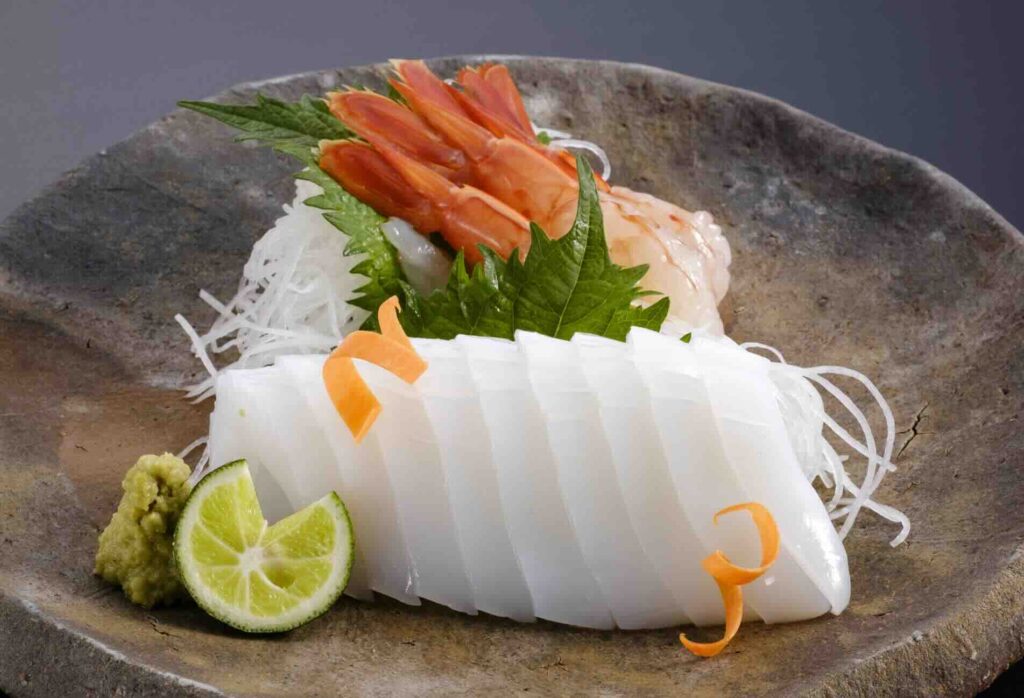
A Dish That Depends on Where the Squid Comes From
Ika sōmen is especially associated with Hakodate in Hokkaido. With strands so thin, the freshness of the squid matters all the way through to the finished plate. Good squid gives the dish its translucency and clean sweetness.
That makes the dish about more than a method you can reproduce from a recipe. The catch, the speed at which it reaches the kitchen and a local appetite for it all help explain why it is particularly at home in a port city.
What You Find in a Convenience Store
Packages marked ika sōmen in Japanese convenience stores often hold processed squid, shredded or cut into fine strips and frequently sold as a dried snack. It borrows the shape, but the texture and taste are quite different from those of freshly sliced squid.
The name has followed the shape into everyday shopping. Knowing what a packet promises makes it easier to understand why the dish in a restaurant makes such a different impression.
Noodles for a Second, Squid Again
What remains after the last strand is a fleeting aftertaste and the little question you asked at the start. What was that I just ate? It’s an encounter with the way shape can steer a first impression.
A lot goes into making that encounter look simple. The width of the cut, the temperature of the plate, the light hand with the dipping sauce and the way the strands fall from the chopsticks all matter. For one brief moment, squid can be noodles. Then it is squid again.