 WALKSCAPE
 Crosswave Edition
Thomas Pynchon’s The Crying of Lot 49 — Following the Muted Post Horn
2024-04-28
Thomas Pynchon is one of the writers most often associated with American postmodern fiction, in a generation that also includes Philip Roth, Cormac McCarthy and Don DeLillo.
His plots turn mysteries, conspiracies and detective work into something less predictable. They make room for elaborate jokes, popular culture, long speeches and questions about how technology changes the world people see.
A Short Novel with a Long Reach
The Crying of Lot 49 puts many of these habits into one of Pynchon’s shortest books. It has become an enduring example of American fiction from the 1960s.
The English title keeps its meaning in reserve. The Korean title points more directly to an auction, which gives readers an idea of what the “crying” refers to before they reach the last scene.
The difference mattered to me as a reader. In English, the pace and the oddity of the words kept me looking for the next thing. In Korean, I found myself more conscious of how slowly the investigation moved.
One of Time’s 100 English-Language Novels
Time included it in its selection of 100 English-language novels published from 1923 to 2005.
First published in the United States in 1966, the book makes use of a culture receptive to hidden explanations. Its imagined postal network, Trystero, has kept readers looking for possible echoes outside the novel too.
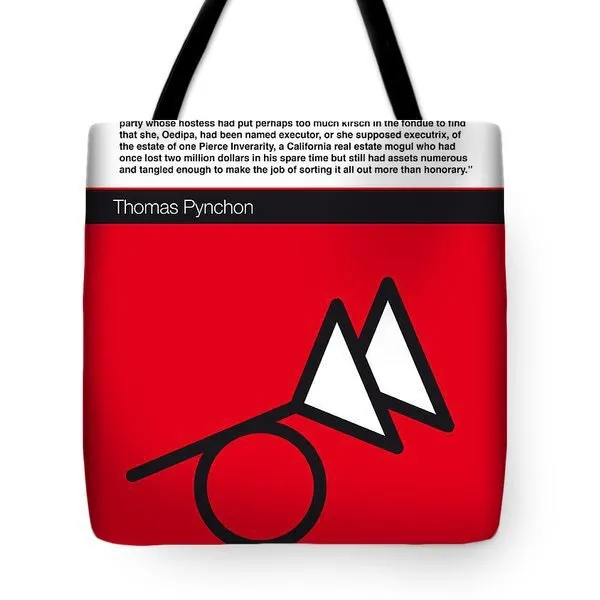
What Is Trystero?
Thurn und Taxis was a historical European postal service. Trystero, also spelled Tristero in the book, is Pynchon’s imagined rival. The novel leaves open how much of its existence Oedipa can establish.
What Names Can Do
Wordplay begins with the title. A “crying” can be the calling out of a lot at auction, though the word does little to prepare you for a detective story the first time you see it.
Character names carry further clues and jokes. Here are three possible readings.
- Oedipa Maas echoes Oedipus, who also investigates a mystery that will change what he thinks he knows about his own life.
- Pierce Inverarity can be heard as “peers in variety,” one of the small invitations to follow a name further than you normally would.
- FCUK Station – FUCK Station
- Dr Hilarius sounds like a cheerful doctor. The man who bears the name becomes much less reassuring.
The Story
Oedipa Maas learns that she has been named executor of the estate of Pierce Inverarity. She is married to Mucho now, but Pierce was once part of her life.
With the help of a lawyer named Metzger, she begins sorting through the estate. The job brings her into contact with signs of a system she might once have passed without seeing. She has to decide whether those signs point to Trystero or only look as though they do.
The more she looks, the more the men around her recede or change. Eventually she is left waiting at an auction, about to hear the calling of lot 49. The book stops there.
The Appeal of a Hidden Explanation
Pynchon uses the peculiar pull of a conspiracy. Something looks close to coming into view, then remains just beyond reach. Every additional clue adds another possible version of the story.
The 1960s offered plenty of reasons to distrust an official account. The Kennedy assassination, the Cuban Missile Crisis and the expanding war in Vietnam formed part of the atmosphere in which this book appeared.
The rivalry between Thurn und Taxis and Trystero gives that suspicion a physical form. You can see it in a stamp or a muted post horn before you know what the mark means.
Can the Message Get Through?
The conspiracy is also a way to ask a question about communication. Pynchon draws on religion, language and science to ask how a person decides which signals are meaningful.
Entropy and Maxwell’s demon appear along the way. The amount of material the novel finds room for can be surprising in a book this short.
If you enjoy a mystery that leaves you thinking about the nature of clues, there is a lot here. I preferred the English version, where the puns and the speed of the sentences are easier to hear.
Book Information
The Crying of Lot 49
- Author
- Thomas Pynchon
- Publication
- 6 March 2009 (Korean edition)
- ISBN13
- 9780060913076
We may earn a commission on purchases made through the affiliate link in this article.