 WALKSCAPE
 Crosswave Edition
Before the Myth, Ashlee Vance’s Elon Musk
2024-01-10
Elon Musk is an easy person to encounter in the news and a harder one to make sense of. Ashlee Vance’s biography was written early enough to show several of the ventures that made his name while their outcomes still felt uncertain.
Tesla was trying to sell electric cars people would aspire to own. SpaceX wanted to reach orbit. SolarCity was looking for a way to make rooftop solar easier to buy. Each business had to persuade somebody to take a chance on it.
People often put Musk in a list with Steve Jobs, Mark Zuckerberg and Jeff Bezos. The comparison I found more interesting was within his own career. How did a person move from an internet directory and online payments to factories, solar panels and rockets?
Starting again with more at stake
Getting even one of those businesses off the ground would have been enough work for most people. In Vance’s account, Musk takes the money and credibility from each success and puts both at risk again.
Zip2 and PayPal were separate companies. The sales of the two ventures helped give Musk capital to put into SpaceX, Tesla and SolarCity, all at stages when it was difficult to tell which ones would survive.
Vance talks to Musk and the people who worked with him
The book follows Musk from childhood to his first companies and into the practical work of finding money, recruiting people and turning ideas into products.
The account draws on interviews with Musk, colleagues and others around him. I found the changes in perspective useful. A decision that seems obvious to the founder can look quite different to the person asked to make it work.
Vance recounts that Musk was reluctant to cooperate at first and eventually agreed to speak with him. The biography is most engaging when Vance can bring those interviews together with accounts from people who saw the same events from elsewhere in the room.
Zip2, X.com and PayPal
Musk grew up in South Africa and left for Canada as a young man. Vance follows the jobs, schooling and moves that took him from there into the American technology business.
Zip2 provided online city guides and business directories for newspapers. Musk later started the separate online financial company X.com, which merged with Confinity and became PayPal. The name X was already in his career long before it appeared on the social network that used to be Twitter.
The sale of PayPal gave Musk room to take much larger risks. The chapters that follow show how quickly that money could be spoken for.
Three ventures, three roles
Musk founded SpaceX, became an early major investor in Tesla and backed SolarCity, the company founded by his cousins Lyndon and Peter Rive. The three relationships were different, even as the ventures drew on a common appetite for difficult problems.
Tesla’s public listing and the scale it later achieved can make its early position hard to imagine. Vance takes us back to the years when producing and delivering an electric car in volume was still an open question.
What SpaceX had to prove
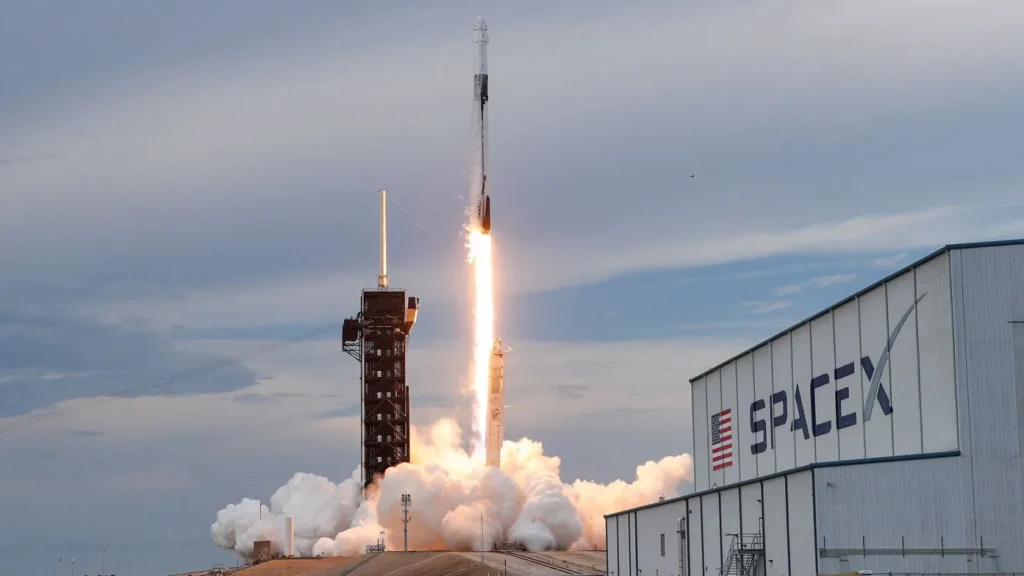
SpaceX entered a field with established contractors and government customers. Building hardware was only one part of the job. Getting to orbit would prove the company could do what it said.
Launch failure is expensive and public. A small company has to find the time and money for another attempt before it can put what it learned to use.
Musk spoke about sending people to Mars. The immediate test was much closer. After three failures, Falcon 1 reached orbit on its fourth flight in September 2008. SpaceX would go on to build other businesses, including Starlink, from a position it had nearly lost.
Eric Berger’s Liftoff spends more time on those attempts. Vance places the same period beside the demands of the other companies Musk was trying to build.
The difficult years at Tesla
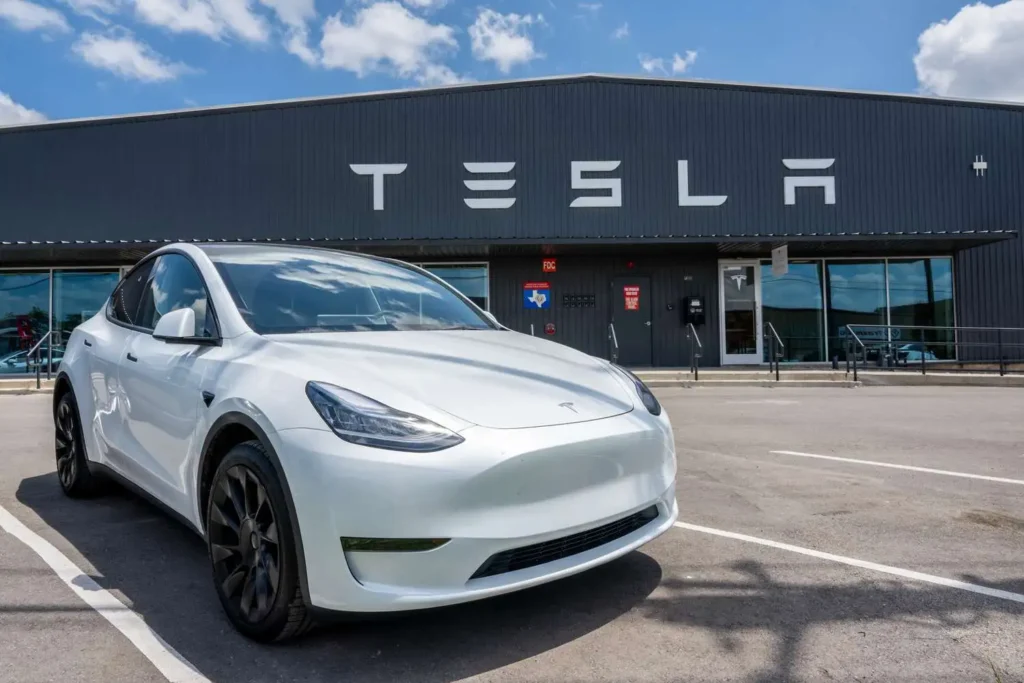
Tesla’s early years had their own delays. A prototype and a product people could buy were different achievements, and the gap put pressure on everyone working on the cars.
The Model S and later the Model X helped make Tesla’s case that an electric car could also be a desirable premium product. Software was part of that proposition from the way drivers used the controls to the changes the company could deliver after purchase.
I thought of Apple’s attention to the interaction between hardware and software. A car is a different machine, but the driver encounters the two together every time they use it.
The scale of the later company gives the story a clear outcome. In Vance’s early chapters, the more revealing question is what had to go right for Tesla to reach it.
SolarCity and the cost of going solar
SolarCity gets less room in the biography. Its rooftop solar business gives the reader a third example of what happens when a technology needs a different way to reach customers.
Instead of asking every customer to pay the full cost of buying and installing panels up front, SolarCity could offer leases and other financing arrangements.
That meant taking on installation costs in exchange for payments over time. The innovation in this part of the story had as much to do with the terms of purchase as it did with the equipment on the roof.
Where the Iron Man comparison came from
The Korean edition runs to hundreds of pages. The pattern I kept noticing was how fast a plan became a list of people to call and problems that had to be solved.
The big claims were part of the appeal. Electric cars and solar power were part of a vision of a different energy system, while sending people to Mars was a much more distant ambition.
The book was published in 2015. Starlink and NASA’s work with SpaceX on a lunar lander belong to the chapters a later account would have to add.
So do Musk’s roles in other projects, including his early involvement in OpenAI and his work with Neuralink. I kept the date in mind as I read. It tells you which claims Vance could put beside an outcome and which he could only report as ambitions.
Musk helped inform Robert Downey Jr.’s portrayal of Tony Stark in the Iron Man films. The comparison makes sense at the level of the public image. In the book, an engineering decision usually takes a roomful of people.
Musk’s acquisition and renaming of Twitter came years later. The revival of the X name gave the old payments story another resonance for me. The way the acquisition unfolded also gave me more questions about the person making those choices.
What stayed with me was how often Vance returns to hiring. An ambitious schedule is easy to announce. The harder part is finding people who can see how to do the work and giving them a reason to come.
I came away thinking about the moment when somebody else joins a project and it stops being one person’s idea. Vance’s biography has some of its best scenes there.
Book details
Elon Musk: Tesla, SpaceX, and the Quest for a Fantastic Future
- Author
- Ashlee Vance
- Korean edition published
- May 20, 2015
- ISBN-13
- 9788934971016
We may earn a commission if you buy through the affiliate link in this article.