 WALKSCAPE
 Crosswave Edition
What Does the “Bag” in Ikebukuro Mean?
2026-03-01
How a Single Word Makes a Place Name Stick
A Place Name You Start to Understand
At first you may look up words because you want to remember place names. As you learn more Japanese, the words start explaining the names to you. Ikebukuro (池袋・いけぶくろ) is a good example.
Anyone who has been to Tokyo a few times will probably know the name of this busy district. At first it’s another sound to keep track of, like Shibuya (渋谷・しぶや) or Shinjuku (新宿・しんじゅく).
Then you learn the word 袋 (ふくろ), and the sound catches your attention.
- Fukuro (袋・ふくろ) = a bag, sack or pouch.
The name starts to look like two parts that have something to do with each other.
Ike (池・いけ) + Fukuro (袋・ふくろ)
The two characters that make up Ikebukuro are everyday words. In the compound, fukuro becomes bukuro.
- 池 (いけ)
- pond
- 袋 (ふくろ)
- bag or pouch
Together they suggest a “pond bag,” an unlikely image for a major commercial district. A local explanation connects the name with a pond, sometimes pictured as a pocket of water in the landscape. A marker at Moto-Ikebukuro Historic Park commemorates the pond associated with the name.
That story lets you picture a patch of water where you might now picture a station entrance or a shopping center.
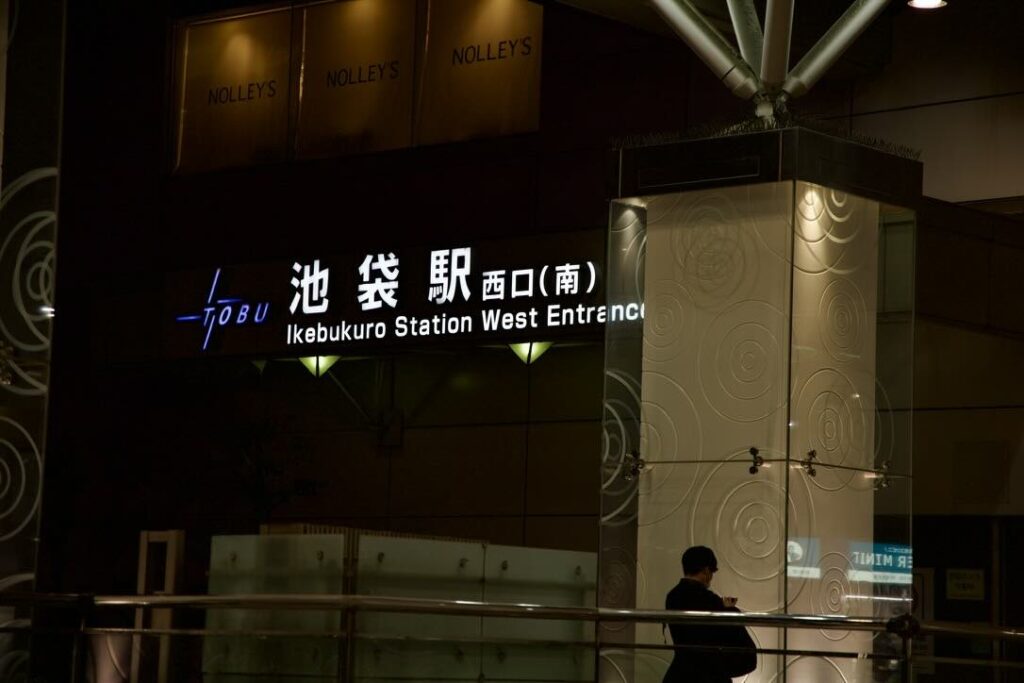
Why the Name Is Easier to Remember
A name that is only a sound can be hard to keep in your head. When you can see its parts, you have something else to remember it by.
Ikebukuro gives you ike, a pond, and bukuro, from the word for a bag. Now you can sound out a name and see the image at the same time.
The picture makes it easier to recall the name when looking at a map or listening for a stop.
How One Word Changes a Map
Ikebukuro today suggests shopping malls, anime stores, billboards and streams of people coming out of the station. The pond story gives the district an unexpectedly quiet image.
This is one of the pleasures of learning Japanese. A name you used to pass over begins to have a shape. You can visit the same places and see a slightly different city.
Learning a language can make a place you already know look new again.
Reading Ikebukuro Piece by Piece
| Word | Reading | Meaning |
|---|---|---|
| 池 | いけ | pond |
| 袋 | ふくろ | bag, sack or pouch |
| 池袋 | いけぶくろ | place name associated in local tradition with a pond |
Think of the water and the pocket of ground that might hold it. The picture gives the two parts of Ikebukuro somewhere to go.
Examples in Context
- 袋(ふくろ)を持(も)ってきてください。
- Please bring a bag.
- この袋(ふくろ)は大(おお)きすぎる。
- This bag is too big.
- 駅(えき)の近(ちか)くに大(おお)きい池(いけ)がある。
- There’s a large pond near the station.
- 池袋(いけぶくろ)で友達(ともだち)と待(ま)ち合(あ)わせした。
- I arranged to meet a friend in Ikebukuro.
The Picture to Take With You
Ikebukuro can mean a busy neighborhood and still make you think of a little pond. That’s often the moment when a Japanese word begins to stick.