 WALKSCAPE
 Crosswave Edition
Kure Reimen: Cold Noodles From a Japanese Port City
2026-04-29
The difficult meal to choose on a trip is the one that surprises you a little. Something familiar is safe and easily forgotten. Something entirely unfamiliar can feel like a commitment. The dish I found in a side street between Kanda and Jimbocho fell somewhere in between. Kure reimen (呉冷麺) shares the characters for cold noodles with Korean naengmyeon, and the name invites a comparison the bowl itself soon complicates.
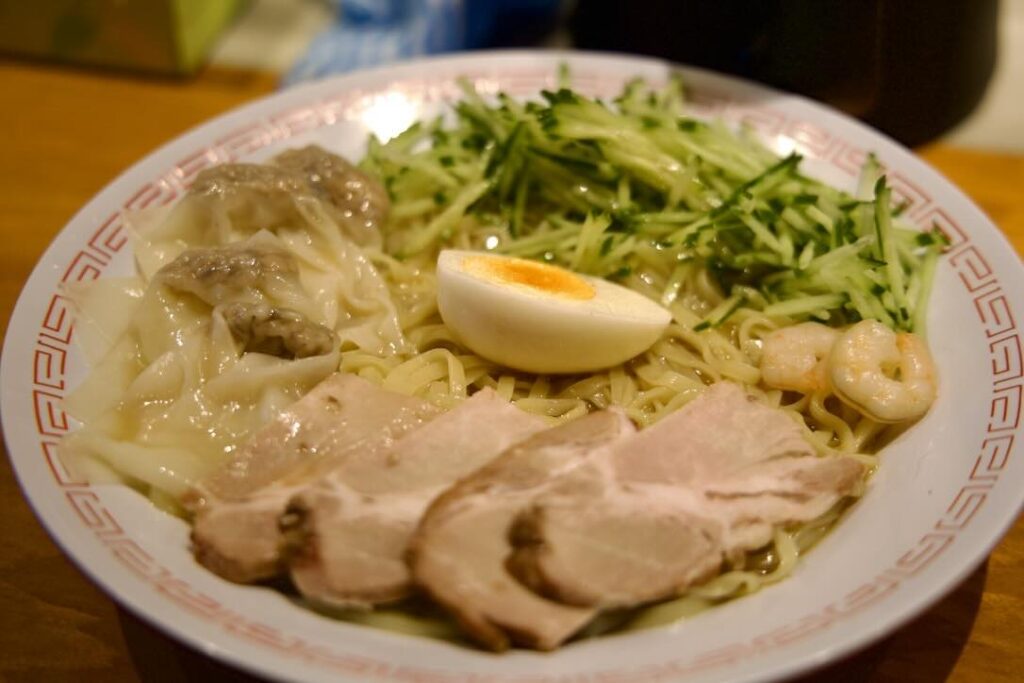
The bowl was understated when it arrived. No mound of ice, no broth gleaming in the light. I noticed the clear liquid and the neatly arranged toppings first: thin slices of chashu, shredded cucumber, boiled egg and seafood. The elements make more sense as you eat them than they do at a glance.
Noodles From a Port City
Kure reimen comes from Kure, a port city in Hiroshima Prefecture. I associate many port-city meals with a certain directness. In places where people have work to get back to, an everyday lunch has to satisfy without weighing you down. It also has to be something you can eat again without tiring of it. I could see those qualities in the bowl in front of me.
Nothing presses too hard. There is no especially strong salt, acid or meaty aroma. The bowl is easy to finish. Where I often remember Korean naengmyeon for the force of the first impression, Kure reimen feels like something that would fit into a regular lunch break.
The First Difference Is Temperature
The first difference is the temperature. The name made me expect a bowl cold enough to numb my mouth. The broth was chilled rather than icy, cool enough to feel refreshing. It is easier to imagine eating it outside the height of summer.
That temperature helps balance the flavors. Too cold, and they become hard to taste. Too warm, and the freshness goes. The bowl finds a point between the two. The first mouthful is gentle and the last one is still easy to eat.
What the Broth Does
The broth often sets the direction in Korean naengmyeon, through the acidity of dongchimi or the flavor of a meat stock. The noodles and toppings take their place around it. In this bowl of Kure reimen, the broth stayed in the background.
It was lightly seasoned, with little noticeable acidity. That left room for the crunch of cucumber, the quiet richness of the chashu and the smooth passage of the noodles. The broth tied those elements together. What I remember is how easily the bowl came together.
How the Noodles Feel
The noodles made the difference clearer. Korean naengmyeon can be elastic and chewy enough for that texture to define the memory of the dish. These were smooth and yielding. They had some spring, but there was little resistance as I ate.
The broth slipped past the noodles rather than clinging to them. Each bite stayed light. What lingered afterward was the rhythm of eating, more than the feeling of being full.
The Work of the Toppings
The toppings had jobs to do. Cucumber gave the bowl a crunch, lean chashu added protein, and the egg softened the flavors around it. Seafood contributed a little umami. They were arranged so that you could notice each without losing the others.
No single flavor jumped out as I ate. The pleasure was in the balance that held through the whole bowl.
Why the Bowl Stayed With Me
Some meals on a trip make a photograph. Others make a memory. A dramatic dish announces itself to the camera, while something ordinary can stay with you for reasons a picture would not convey. Kure reimen was closer to the second kind.
I had spent much of the day walking between locations from Chainsaw Man. The noodles did more than fill me up. I felt a little less tired afterward, and it was easy to carry on with the day. I came away with the impression of a meal made to fit the rhythm of the neighborhood.
What a Shared Name Can Tell You
The interest still begins with the name. The characters for cold noodles make comparison almost unavoidable. Kure reimen has its own history in Japan and makes more sense when you encounter it on those terms.
Two kinds of noodles can share a name and have a different place at the table. This was a gentle bowl, easy to overlook at first and easy to remember afterward. It was the kind of meal that sometimes turns up when you travel.