 WALKSCAPE
 Crosswave Edition
Guljeon Slows Down a Winter Dinner
2026-04-24
A Dish That Tastes of the Season
Oyster soup with rice is a meal in itself. Pan-fried oysters feel like a way to notice the season. We know oysters are a winter ingredient. A warm plate of guljeon makes that especially clear.
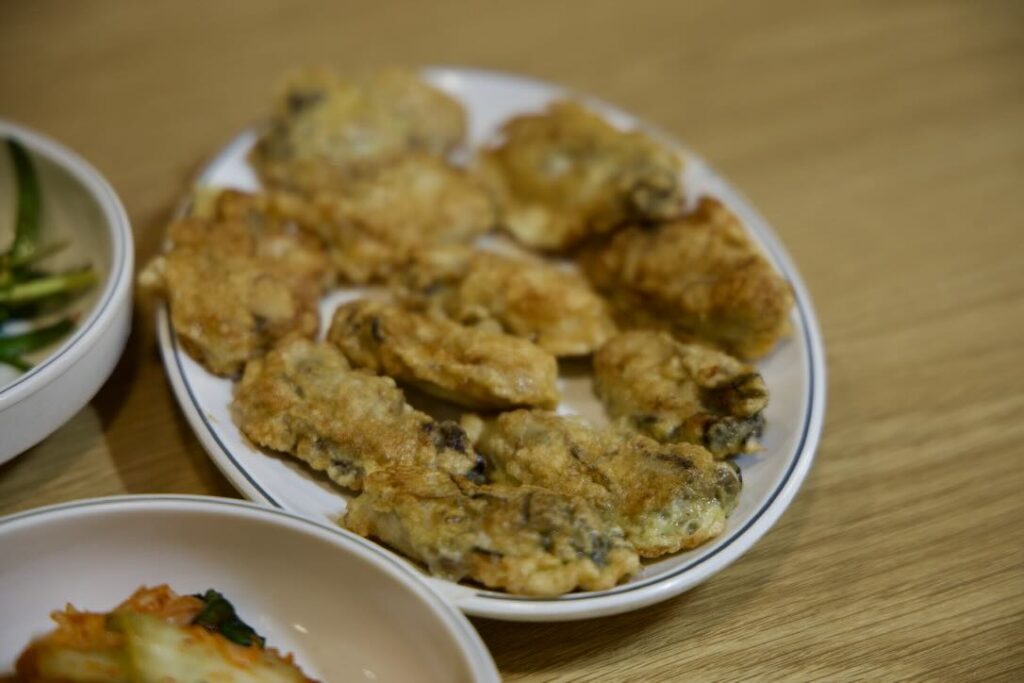
Oysters are good raw or in a soup. Pan-frying them is one of the simplest ways to cook them, and it brings a particular warmth. A light dusting of flour and a coating of egg make something quite different from a raw oyster or a spoonful of broth. The outside sets gently, while the oyster stays moist inside. That difference in texture is what makes guljeon.
As winter begins, oysters become more visible in markets and restaurants. The smell of them cooking in a pan can make you stop. It brings the season to mind before you have even considered whether you are hungry.
A Simple Method With a Distinct Result
Rinse the oysters and drain them. Dust them lightly with flour, dip them in beaten egg and fry them in a pan. The process asks for very little seasoning or preparation.
Cooking changes the oyster. In soup it becomes part of the broth, and when it is raw the aroma comes first. In guljeon, the texture is what you notice.
The egg gives the outside a soft, savory coating and the oyster retains its moisture within. The scent of the sea comes through as you chew, more gently than it does in a raw oyster. The cooked texture and milder aroma make the dish approachable for people who are unsure about oysters.
The flavors take their time. There is no fierce seasoning to taste all at once. I find I slow down without trying to.
A Side Dish and Something to Have With a Drink
Guljeon sits between banchan, a side dish to eat with rice, and anju, food to go with a drink. It can do both comfortably.
With rice it can take the place of a meat dish. It is fried but does not feel heavy, and it goes easily with plain rice even without soup. A little soy sauce is enough. The egg and the oyster already bring their own savory flavor.
It works particularly well with makgeolli, the milky Korean rice drink. You lift an oyster just off the pan, let it cool and eat it a little at a time. That suits the pace of a table where people are drinking and talking.
It is especially good as a shared plate. It sits in the middle of the table, and as people take one oyster at a time, the evening grows a little longer.
Why It Comes to Mind in Winter
You can buy oysters throughout the year, but I think about guljeon most in winter. The warmth is part of the dish.
The colder the air outside, the more warmth you notice at dinner. A bowl of soup warms you through. A fresh plate of guljeon is warm only briefly. You have to eat it soon after it leaves the pan, and that short interval makes it feel worth paying attention to.
It is also a dish I associate with home, though restaurants serve it too. It belongs easily in scenes of a holiday, a family gathering or a winter dinner. The sound and smell reach the living room, and the oysters accumulate one by one on a plate. The meal has already begun by the time everyone sits down.
Eating guljeon can feel like sharing an hour of a winter evening as much as eating seafood.
A Few Bites That Stay With You
A few oysters eaten slowly are usually enough. What remains at the end of the meal is the feeling of having eaten well.
The taste is quiet enough to recur in the memory each winter. Some foods make a strong impression once and rarely come to mind again. This one hardly announces itself when you eat it, yet I think of it again as soon as the weather changes.
Guljeon makes the flavor of an oyster easy to spend time with. It brings the sea to the table gently and warmly. That is one reason a winter dinner can last a little longer.