 WALKSCAPE
 Crosswave Edition
Between the Noodles and the Broth: How to Eat Tsukemen
2026-11-13
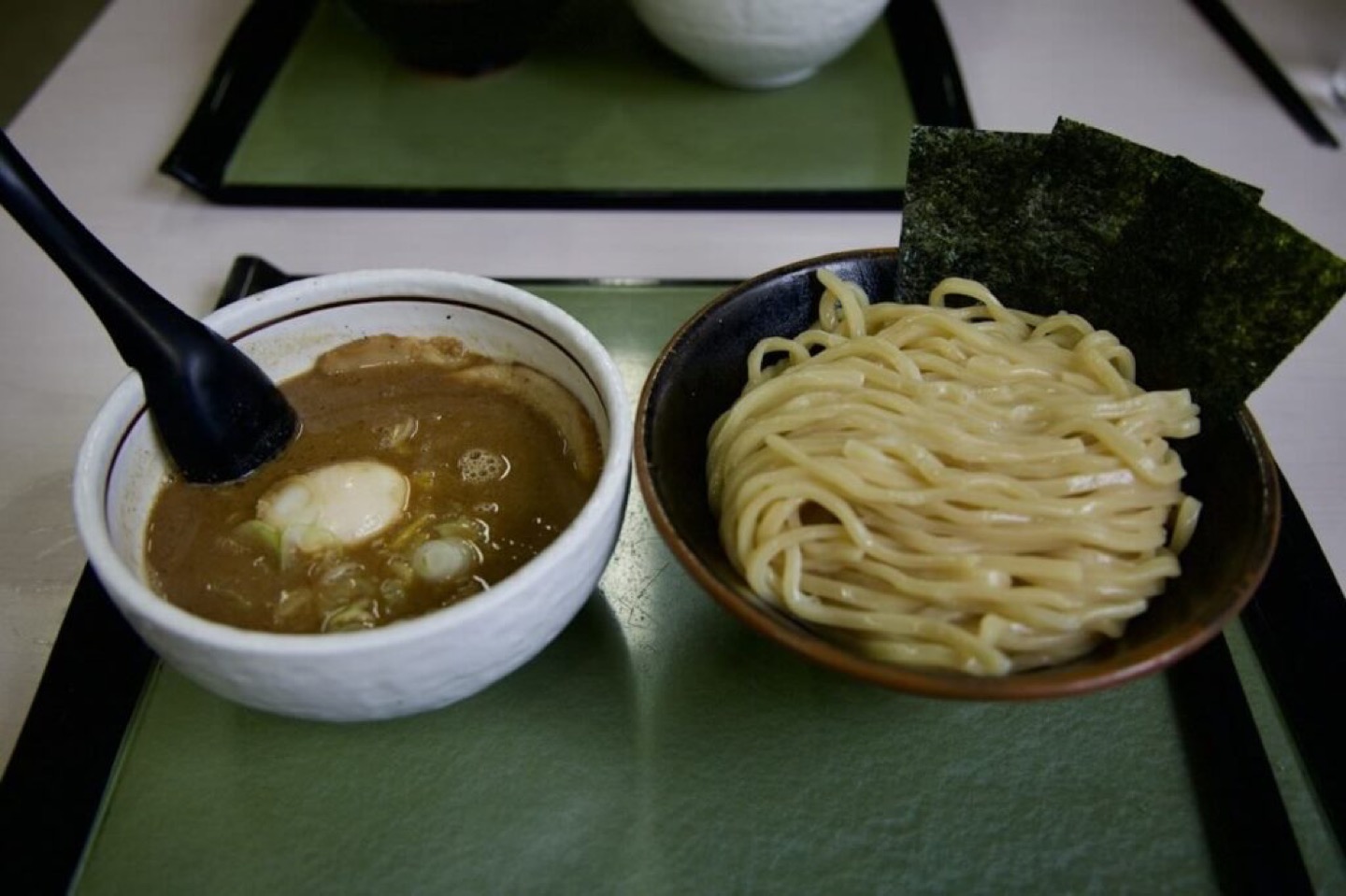
Order tsukemen and the noodles and broth arrive separately. At Menya Rokuon in Tokushima, your chopsticks go to the plate of noodles first. It may look like the contents of one bowl spread across two dishes, but each time you lift a few strands you decide how far to dip them. That little choice shapes the meal right down to the last bite.
Choosing Between Cold and Warm Noodles
Chilled noodles let you notice their spring and the feel of their surface before any broth touches them. At shops that offer warm noodles, look for the word atsumori. The two bowls are separate, but their temperatures affect each other. Each dip of cold noodles cools the small bowl of broth, so the first bite and the last have a different warmth. Cold and warm noodles give you different starting points for the same meal.
Taste the Noodles First
Try a few strands on their own to get a sense of their thickness and chew. Rinsing them cold makes the texture on the surface more apparent. Warm noodles begin the meal at a different temperature. In ramen, the noodles sit in the broth from the start. In tsukemen, only the strands in your chopsticks meet the broth, and only when you dip them.
Two people can order the same dish and eat it quite differently.
Everyone finds their own pace. You can decide how much of a mouthful to dip, how long to leave it in, and how strong you want the broth to taste. Some people barely wet the noodles. Others soak them through or dilute the broth partway through the meal.
How Deep You Dip Changes the Bite
In the photograph from Menya Rokuon, the noodles and broth each have their own dish. You can dunk everything you pick up or dip just the ends. Go deeper for the aroma of the broth. A quick dip leaves more of the noodles’ flavor and texture. Setting the balance one mouthful at a time makes this a different experience from a bowl of ramen.
The Broth Travels One Mouthful at a Time
A few strands can carry only so much liquid, which helps explain why some shops make the broth especially concentrated. A light dip lets the taste of the noodles come through. A deeper one brings out the broth’s aroma and saltiness. The temperature changes too, as successive dips of cold noodles cool the broth.
With ramen, you can drink the soup alongside the noodles. With tsukemen, the broth coats them. They come into contact for only a few seconds, so a strong broth can flavor the whole bite. It sits somewhere between a soup and a sauce.
The Broth Can Have a Second Life
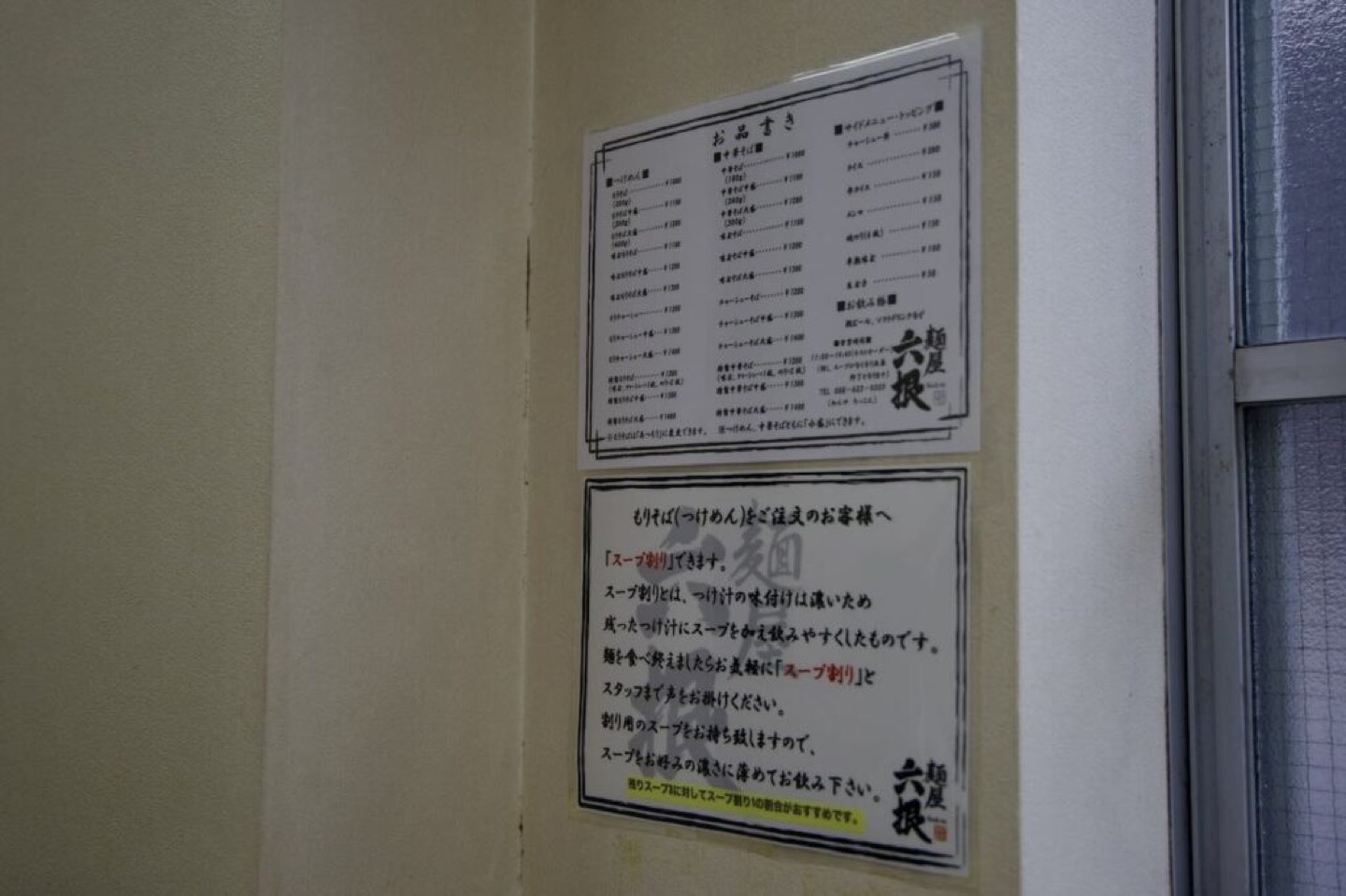
Some shops offer soup-wari (スープ割り). After the noodles are gone, they add stock to the dipping broth to make it easier to drink. Whether it is available and how you ask for it depend on the shop. A meal that began with two dishes ends in stages: lift the noodles, choose how much to dip, then drink what remains. The order makes a difference even when the ingredients are familiar.
There is a rhythm to dipping and lifting the noodles. Everyone eats at a different pace, and at a quiet counter it feels perfectly natural to do it alone.
Eating at Your Own Pace at the Counter
Serving the meal in two dishes changes its pace as much as its temperature. Even if you sit side by side at a counter, each person has their own noodles and broth and can take their time. There is no need to mix both bowls together when they arrive. The two dishes at Rokuon show how much control a diner has over the meal, one bite at a time. That is a more useful way to understand tsukemen than treating one counter as evidence of how a whole city eats.
Ordering Tsukemen
- Dish
- Tsukemen (つけ麺)
- How to eat it
- Pick up a few noodles and dip them into the broth
- To finish
- Availability of soup-wari varies by restaurant