 WALKSCAPE
 Crosswave Edition
What the Singapore Dollar Shows You
2026-03-18
One of the first ways to see what a country puts in front of its citizens is to look at the cash you get in change. In Singapore, a small set of familiar banknotes moves between the places where you eat, shop and get around. Their design tells a story about what the country has chosen to put into ordinary hands.
The currency is the Singapore dollar, abbreviated SGD or written S$ when it might be confused with another dollar. The Monetary Authority of Singapore (MAS) uses the exchange rate as its main monetary policy tool and manages the Singapore dollar against a trade-weighted basket of currencies to support price stability.
What You Can Read From the Notes
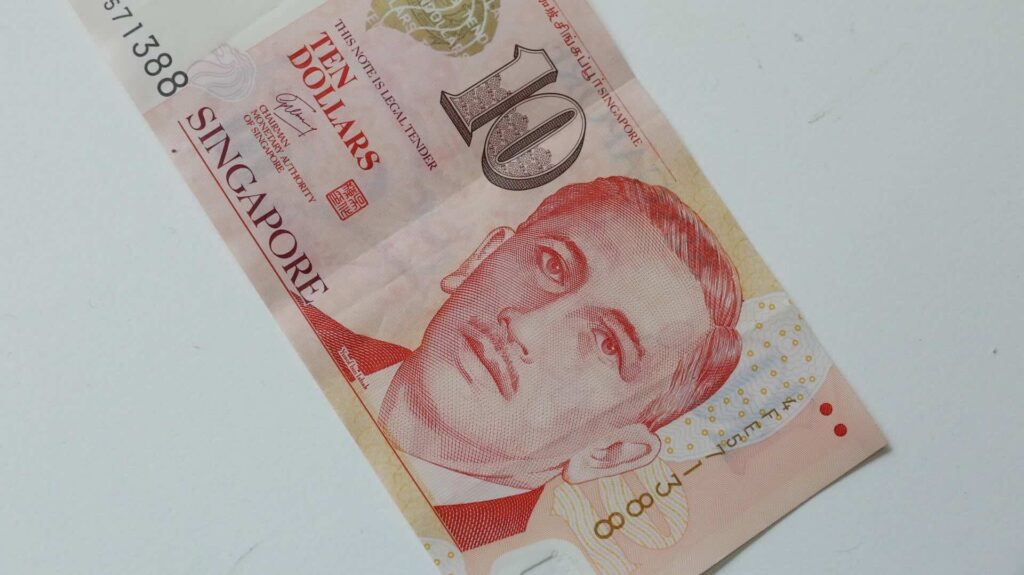
The familiar Portrait Series starts with the S$2 note. The other denominations are S$5, S$10, S$50, S$100, S$1,000 and S$10,000. The largest two are no longer issued, although existing notes remain legal tender. If someone hands you a S$20 note, it belongs to another issue.
The S$2, S$5 and S$10 Portrait notes have both paper and polymer versions. The polymer ones feel different in the hand and can withstand plenty of handling. The standard S$50 and S$100 Portrait notes are paper. Singapore has issued polymer commemorative notes in some other denominations, including S$20.
| Denomination | Series or status | Material | What to look for |
|---|---|---|---|
| S$2 | Portrait Series | Paper and polymer | Education on the reverse |
| S$5 | Portrait Series | Paper and polymer | Garden City on the reverse |
| S$10 | Portrait Series | Paper and polymer | Sports on the reverse |
| S$20 | Some older or commemorative issues | Varies by issue | Outside the standard Portrait Series |
| S$50 | Portrait Series | Paper | Arts on the reverse |
| S$100 | Portrait Series | Paper | Youth on the reverse |
| S$1,000 | Portrait Series · issuance ended in 2021 | Paper | Existing notes remain legal tender |
| S$10,000 | Portrait Series · issuance ended in 2014 | Paper | Existing notes remain legal tender |
Why the Portrait Stays the Same
Yusof bin Ishak, Singapore’s first president, appears on the front of every note in the Portrait Series. MAS says it selected him to recognize his role in nation-building. A face also provides a recognizable set of details that is difficult to reproduce accurately.
The reverses give each denomination a theme. A S$2 note shows education, a S$5 note the Garden City and a S$10 note sports. Larger notes depict arts, youth, government and economics. The front gives you a familiar point of reference. The back has room to show a different part of the country.
What the Coins Add
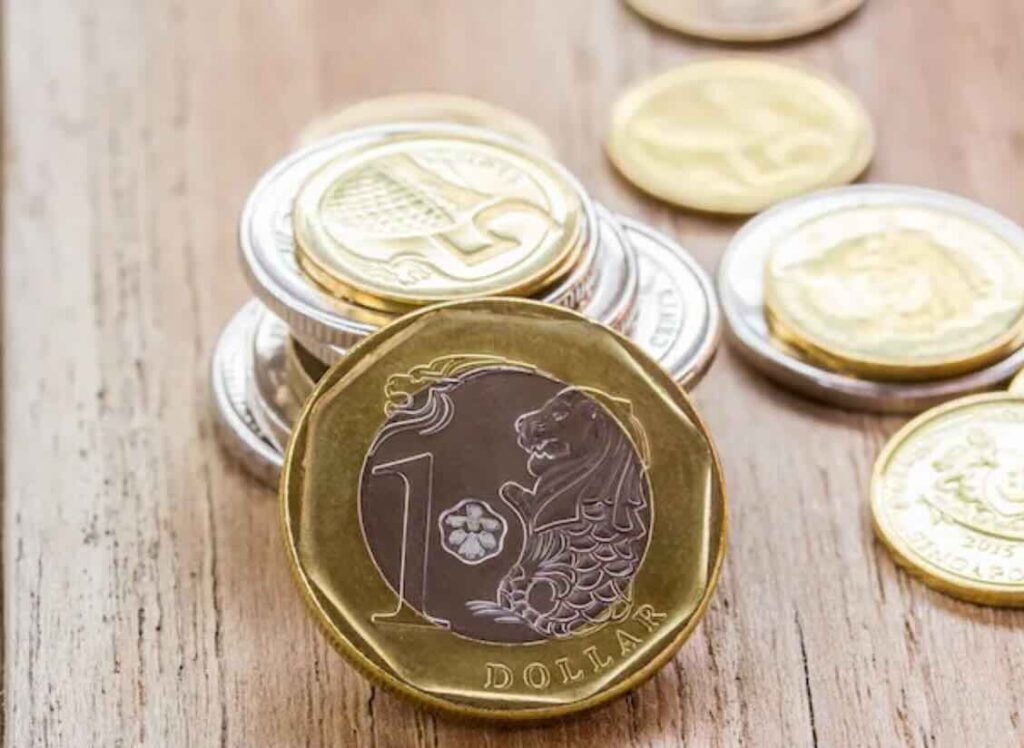
The current Third Series of coins comes in five denominations from five cents to one dollar. Singapore stopped issuing the one-cent coin in 2002 because it was seldom used. Existing one-cent coins remain legal tender.
The one-dollar coin is relatively substantial, with a gold-colored outer ring and a Merlion in the middle. Coins are one way to make change, though on a day spent tapping a card you might receive very few.
| Denomination | Issue status | Third Series motif or note |
|---|---|---|
| 1 cent | No longer issued | Older coins remain legal tender |
| 5 cents | Third Series | Esplanade |
| 10 cents | Third Series | Public housing |
| 20 cents | Third Series | Changi Airport |
| 50 cents | Third Series | Port of Singapore |
| 1 dollar | Third Series | Merlion |
A Place for Cash Alongside the Card
I could tap a card for many of the things I wanted to do in Singapore, including paying for public transport with a compatible card and making purchases at many shops and restaurants. Cash still gave me another way to pay when the available options differed.
At some hawker stalls, small shops and markets, banknotes can be easier than working out which card or payment app a seller accepts. Keeping cash available also gives visitors and people without access to a particular payment service a way to buy what they need.
What a Familiar Note Can Say
Turn a note over and you see a scene chosen for a particular reason. Carry a few denominations and you begin to recognize the whole arrangement. The designs are consistent enough that once you know one, the rest are easy to find your way around.
I’d felt something similar in the transport system. In both cases, it was easy to see what I could expect the next time I reached for it. A note or a coin can communicate that in a very small space.
The currency is useful every time you hand it over.
Look at it for a little longer and you can see part of the story Singapore has chosen to keep in circulation.
MAS · Banknotes · MAS · Coins · MAS · Monetary policy framework