 WALKSCAPE
 Crosswave Edition
How Singapore Became the Lion City
2026-03-14
How a City-State Tells Its Own Story
At the southern end of the Malay Peninsula, Singapore looks small on a map. Its name now brings to mind a port, a financial center and a place people travel from far away to see. Each of those associations came later than the stories carried by the name.
Singapore takes its name from the Malay Singapura. Follow it back to the Sanskrit roots of the name and you reach the familiar translation, “Lion City.” You can still see the animal wherever the city makes a point of showing who it is.
The Story Behind the Lion
The Malay Annals tell of Sang Nila Utama, a prince from Palembang associated with the Srivijaya ruling house. In the story he reached the island and saw an animal he was told was a lion. He named the place Singapura.
There’s no evidence that lions lived wild on the island. Tigers did live in the region, and a tiger is sometimes suggested as a possible model for the story. What the prince might have seen is part of the uncertainty that comes with a legend.
The lion stayed. What interests me is how the city continued to find uses for it long after the moment the story describes.
Another Name: Temasek
An older name associated with the island is Temasek. The Singapore Tourism Board connects it with a Malay word for lake. A National Library Board account gives an Old Javanese reading meaning seaport. Whichever explanation you encounter first, the older name belongs to a place with a long relationship to the water and the trade that moved across it.
The name is still in use. Temasek, the investment company owned by Singapore’s government, took it up in a very different period of the island’s history.
The two names give the city two kinds of memory. One has a lion at its center. The other lets you think of a place people once reached by sea.
The Merlion Brings the Two Stories Together
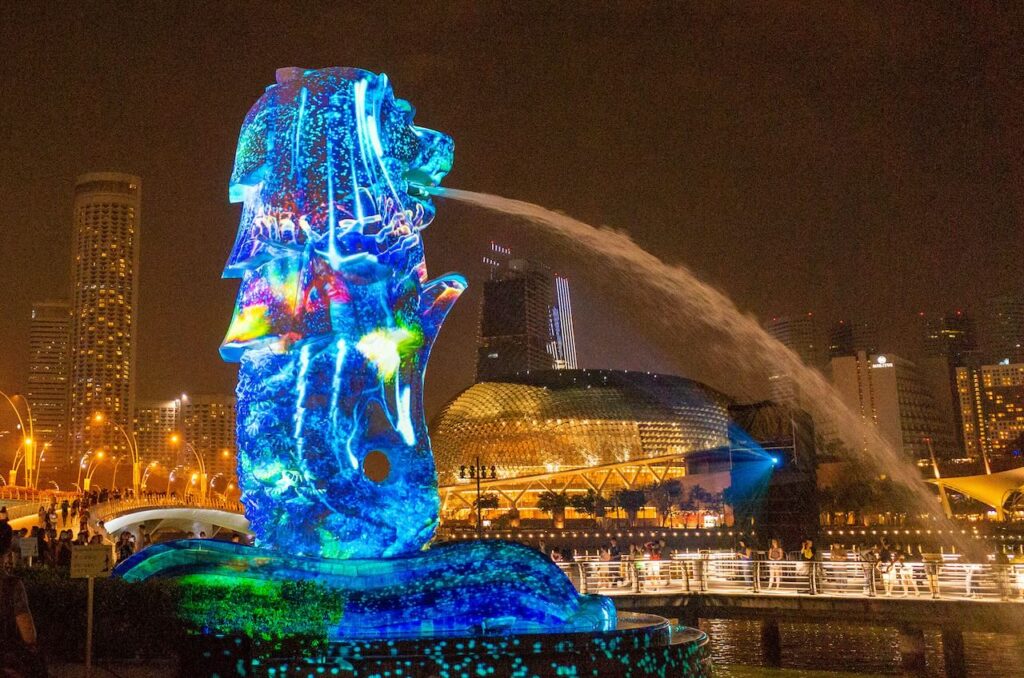
The Merlion has the head of a lion and the body of a fish. An animal that has never existed became one of the easiest ways to recognize Singapore.
The head points to Singapura and the Lion City. The fish points back to the island’s maritime origins, which the tourism board associates with Temasek. Both images are visible at once.
The best-known statue stands at Merlion Park, facing Marina Bay. The smaller Merlion cub behind it carries the same form at a different scale.
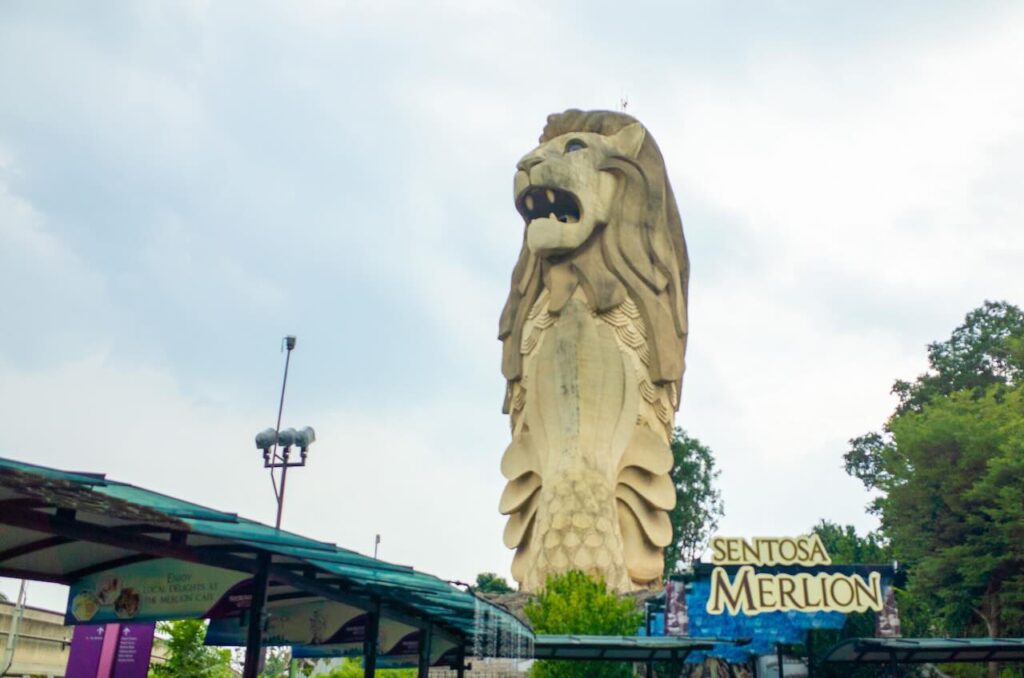
A much taller Merlion once stood on Sentosa. Versions have also appeared elsewhere, including at Mount Faber. Repeating the figure in different parts of the city gave the story a life beyond one waterfront statue.
Why the Lion Stayed
What does it mean to keep calling a place the Lion City when the island probably never had lions? A name can do work well beyond recording what somebody saw.
A port among the sea routes of Southeast Asia had plenty of reasons to be known and remembered. The lion offered a way to picture strength and resolve even if the real animal in the account remains a mystery.
The Merlion gives that story a form people can encounter in public. You don’t have to settle the historical question to understand what the combination of lion and fish does.
Reading the Name as You Walk
Singapura, Temasek and the Merlion can look like separate pieces of visitor information. Together they show how the city has chosen to tell its history.
Once I knew the stories, the statue at Marina Bay began to read as more than a place to take a picture. It brings the port and the lion into the same figure.
The name is somewhere to start if you want to know how this city sees itself. There is a great deal in the few syllables people say when they arrive.
National Library Board · Early Singapore · Singapore Tourism Board · Merlion Park