 WALKSCAPE
 Crosswave Edition
Peranakan Life in Singapore, From Armenian Street to Emerald Hill
2026-03-08
Calling Singapore multicultural tells you something about who lives there. It can also describe a much longer process in which people moving between ports developed ways to live together. Peranakan communities make some of that history visible.
Their lives were shaped by migration, settlement, marriage and the work of making a home. In Singapore, you can see the results in words, in things people kept in their houses and in the houses themselves.
Where the Word Peranakan Comes From
The Malay word has anak, meaning “child,” at its root. The Peranakan Museum glosses the adjective as “born of” and explains that it can refer to place, ancestry or other forms of belonging. Over time it became a name for several communities whose ways of life took shape in Southeast Asia.
Trade through the Strait of Malacca brought people from many places. The Chinese Peranakan communities are among the best known, especially in accounts of Singapore and the former Straits Settlements. The term is also used by other groups, including Jawi and Chitty Melaka Peranakans.
In Chinese Peranakan communities, baba is commonly used for men and nyonya for women. The words came to identify more than the person being addressed. They could also tell you which community and traditions the person belonged to.
What a Community Makes Its Own
Descent is part of the history. The things people can see and experience today also reflect choices made in daily life about language, dress, cooking and the way a house is arranged.
Some Chinese Peranakan families retained practices such as ancestor veneration while adapting food and clothing to what they found around them. Baba Malay, used in some communities, is one example of a language shaped through contact. Usage has differed from one place and community to another.
It’s in these details that the culture becomes recognizable. A household can carry something across generations while taking on much from the place where it lives.
Inside the Peranakan Museum
The Peranakan Museum on Armenian Street makes those details easier to see together. It looks at communities across Southeast Asia and brings historical objects into contact with work people are still making today.
The galleries are arranged around origins, home and style. Ceramics, textiles, jewelry and furniture tell part of the story. What I found especially interesting was how the objects made family and community life easier to picture.
Wedding porcelain, beadwork and clothing suggest what went into a particular occasion or a day spent at home. The objects give you a way to think about how people worked, dressed and entertained a guest.
On the Street at Emerald Hill
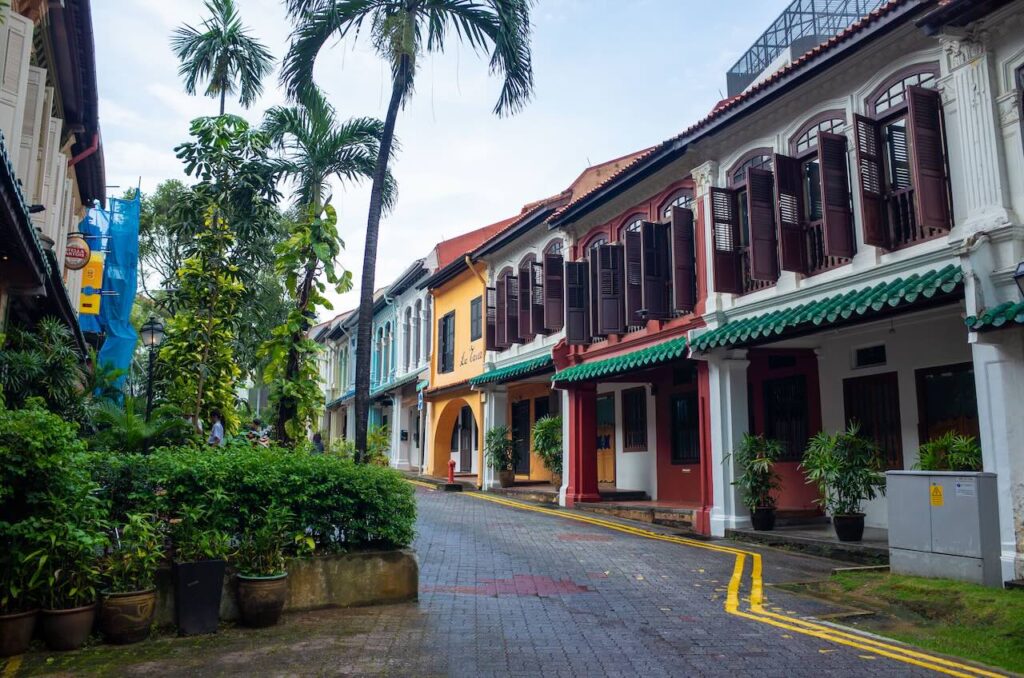
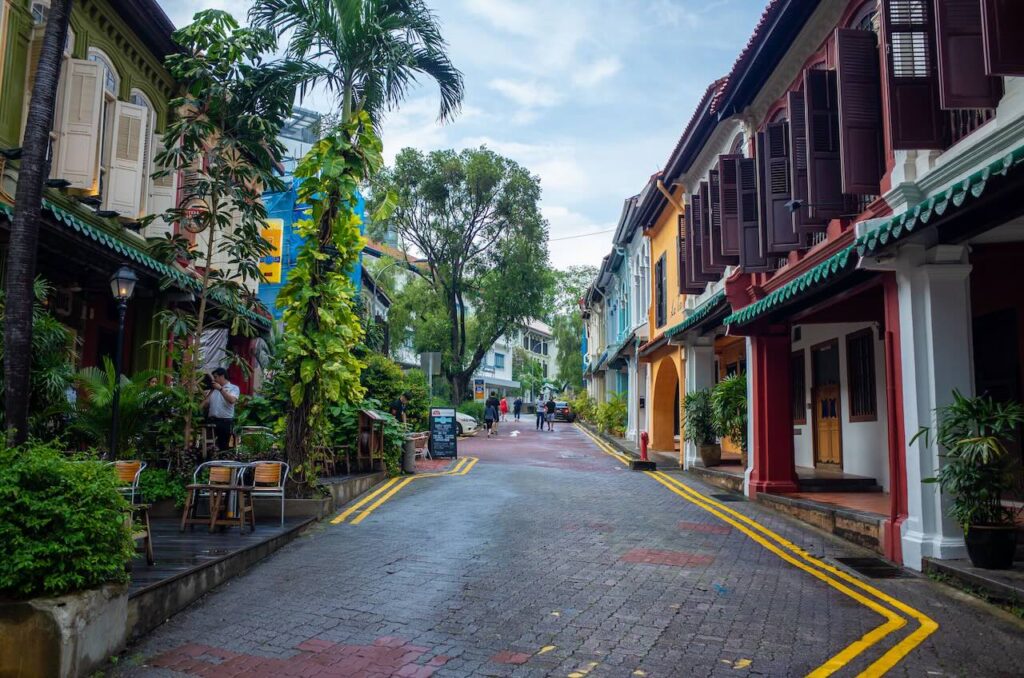
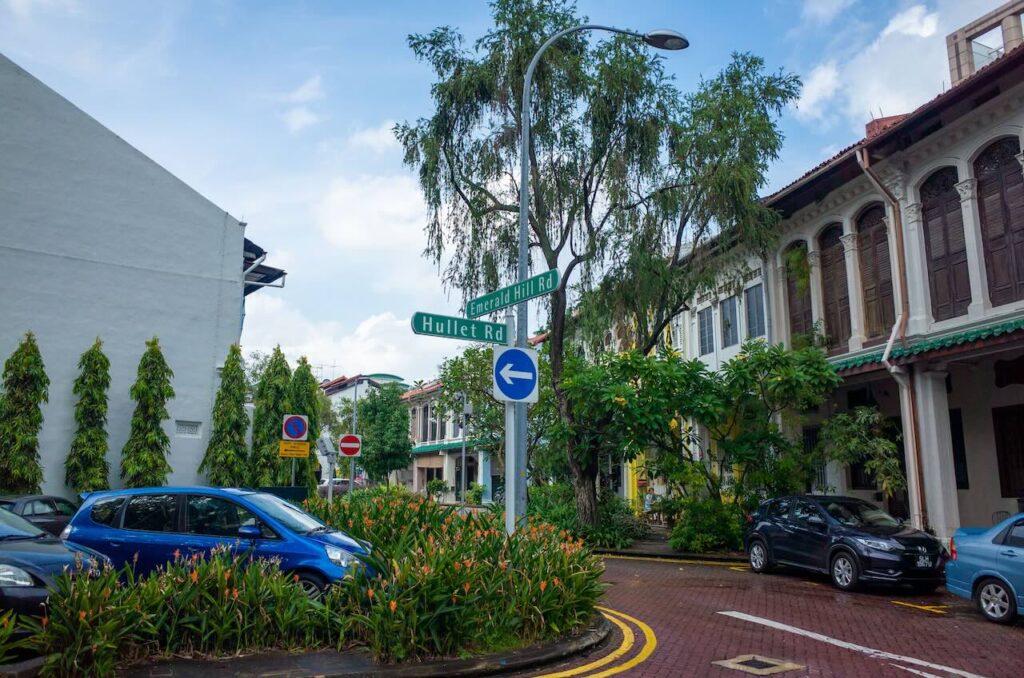
There are also traces of Chinese Peranakan life in the buildings off Orchard Road. Emerald Hill is one of the easiest places to see them on a walk.
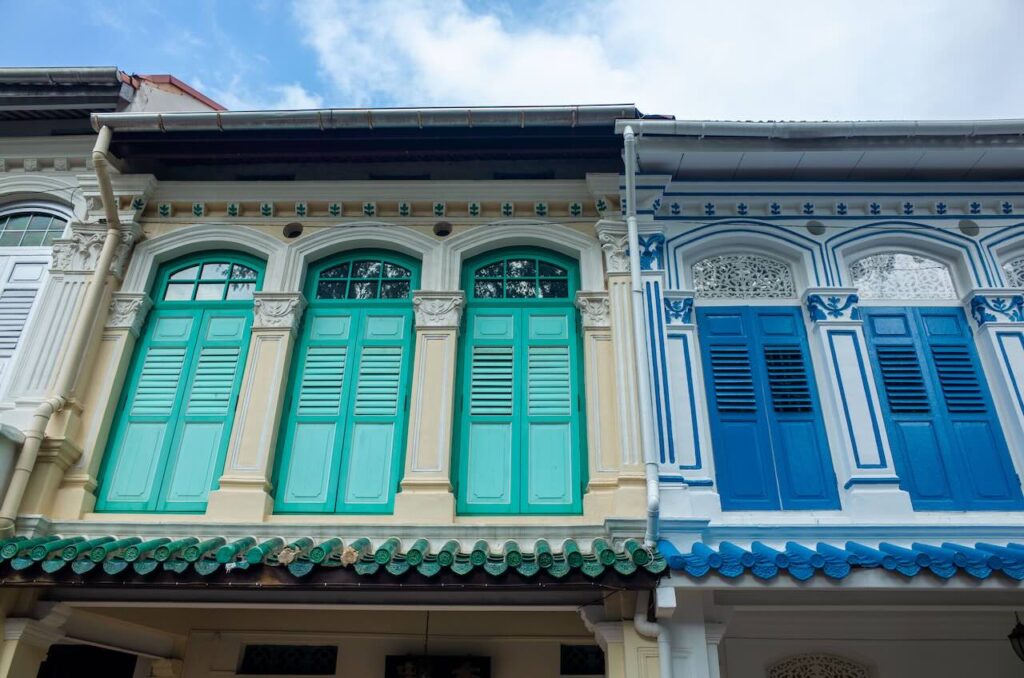
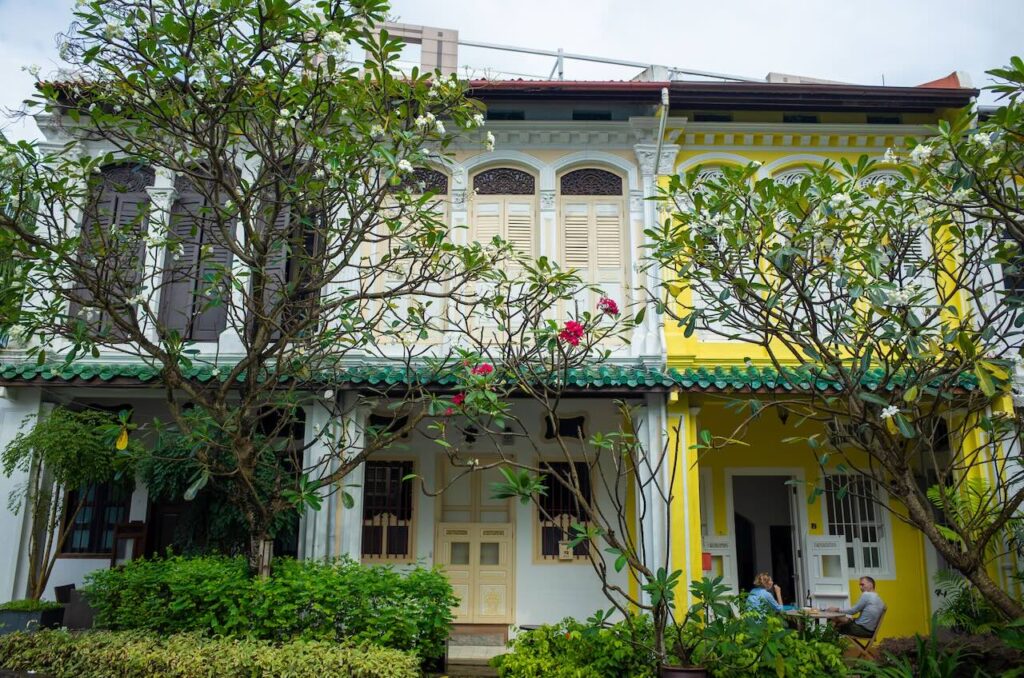
Turn off the shopping street and you come to rows of houses with pastel facades, tilework, carved wood and elaborate plaster. The conservation area began as a residential district for Chinese and Straits Chinese merchants and their families.
Many of the houses are still used as homes. In Emerald Hill, the old architecture holds the ordinary life of a street people still live on. The past is visible without the street having to be reconstructed as a period scene.
What the Culture Leaves Visible
Behind the financial district and the modern skyline is a history of people moving, trading and making lives together. The Peranakan communities offer a way to see that history at the scale of a family or a room.
Their traditions show how practices change when people carry them into a new setting. Some are kept, some are adapted and some take on a form they couldn’t have had before.
A Way to Look at Singapore
The culture continues outside museum cases, in the language of a household and the food people cook, as well as in preserved objects and streets. It’s a way to follow people’s choices over a long stretch of time.
Walking through Singapore, I’m often aware of how hard it would be to describe the city through a single language, style of cooking or kind of building. Peranakan history gives some of that mixture a face.
Knowing a little of it changes what I see on the walk. In a quiet street just off Orchard Road, there’s a record of how people with different histories found ways to make a home.
Peranakan Museum · About the Peranakans · Urban Redevelopment Authority · Emerald Hill