 WALKSCAPE
 Crosswave Edition
TAM Airlines Made a Movie Theater at 36,000 Feet
2025-12-31
Airline advertising has a hard time making one cabin look different from another. Seats, meals and service matter, but the images can begin to blur together. It leaves a writer reaching for words like comfort and premium. For this campaign, TAM made a choice about how much of the cabin it needed to show.
In 2008, the Brazilian airline and Y&R Brazil ran a pair of print ads that said little about the cabin or its equipment. They gave the viewer a question to think about instead.
How far could a movie take you while you were already in the air?
Selling In-Flight Entertainment Without Showing the Screen
The King Kong execution earned a Bronze Lion at Cannes. What makes the work worth looking at now is how little of the usual airline advertising appears in it.
There’s no view of the cabin, no seat and no screen. The ad puts a scene from a film into a landscape seen from above. It looks as though the movie is happening down there, within the field of view of the passenger looking out.
What 36,000 Feet Does for the Picture
A small line of type establishes the altitude: 36,000 feet.
It’s a measurement few people can picture from the ground. In the ad, it tells the viewer where to stand in relation to the image. Everything below is a long way off, and yet the film can still draw you in.
Even at this distance, the story can hold you.
There’s little to say about the quality of the screen or the number of titles once the image has done its job. The campaign asks the viewer to imagine being absorbed in a film at a height that already feels unreal.
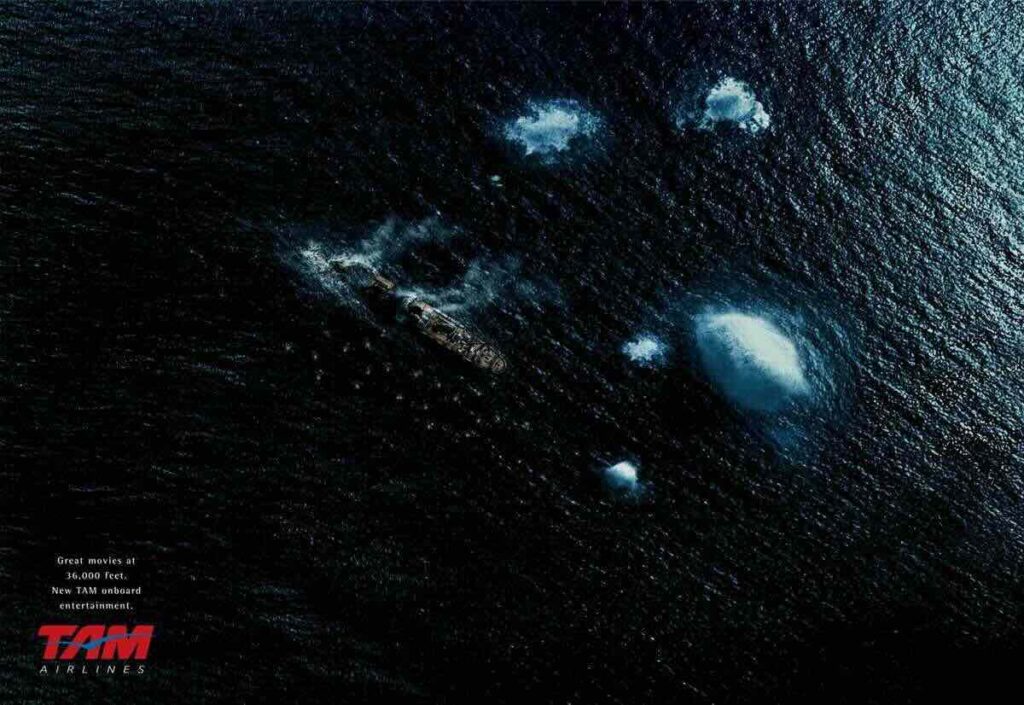
Why King Kong and Titanic?
The films are part of the argument.
King Kong and Titanic both work at a scale that has helped define the appeal of a big screen. People bring a memory of the spectacle with them when they recognize either film.
What would a film like that look like from this height?
The question is enough to get the viewer looking. The campaign uses a filmgoer’s memory of the two stories to establish what its own service can offer.
Where the Viewer Fits
The airline leaves the point of view of the passenger at the center of the composition.
The plane is implied. The logo sits off to one side. That leaves you free to imagine watching the scene from your own seat.
In that moment the service has become an experience you can picture yourself having. The ad draws you into it before it tells you who is selling it.
What Stays After the Ad
The prints leave a simple idea about what happens to a good film on a long flight.
A film can still take you somewhere when you’re already on the way somewhere else.
The view does almost all the explaining.
The seats and the hardware have long since changed. The work still makes sense because it’s about what happens when a film holds your attention.