 WALKSCAPE
 Crosswave Edition
One More Card, or Back to Camp? — Incan Gold
2026-02-04
Incan Gold sounds simple when you hear the rules. Go deeper or turn back. Those are the only choices, yet they can be surprisingly hard to make at the table. The treasure is piling up in front of you, and everyone knows the next card could wipe it out.
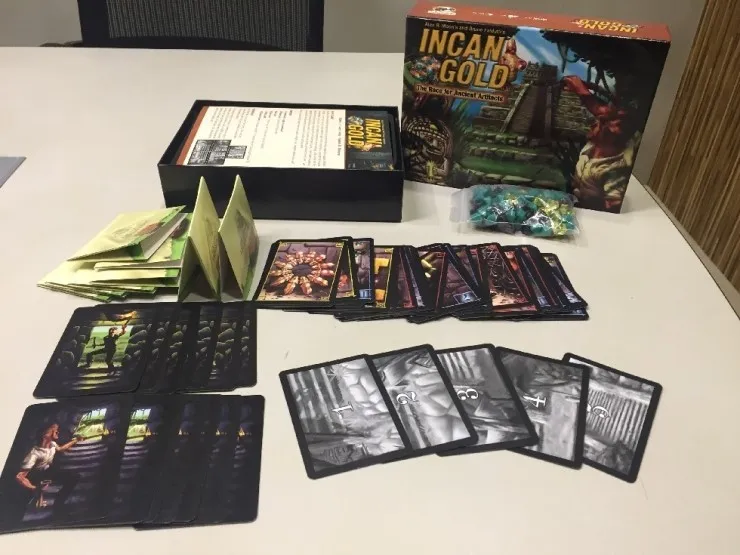
The game came out in 2006, and its designers, Alan R. Moon and Bruno Faidutti, will be familiar names to many board-game players. A Korean edition followed in 2015. It has held an unusual place somewhere between a party game and a strategy game. The idea is simple, but few games reveal so much about the people making the decisions.
Treasure or Trouble
The players are explorers searching for ancient Inca artefacts deep inside a temple. Everyone starts the round on the same path. Turn over one adventure card at a time and it may reveal treasure or a hazard. Treasure builds up along the route. When a hazard appears, everyone pauses to take stock.
The danger is seeing the same hazard twice. Explorers still in the temple lose everything they had picked up that round. The treasure that was in front of them a moment ago disappears, and the person who said “let’s go a little farther” is often the quietest. You are likely to hear some version of the same line:
“If only that card hadn’t come up.”
Why Turning Back Is Its Own Gamble
What makes the game interesting is that turning back can pay off. Explorers who choose the camp card and leave divide the treasure left on the path. If several leave together, they split it. If you leave alone, you get the lot.
That makes for a familiar exchange at the table.
- “There’s barely anything if I leave now…”
- “If the next hazard matches, it’s all gone.”
- “We’ve only seen one hazard so far.”
The game may look as though it has stopped while people talk. This is where the real action is. One player stays in for a big haul and another leaves early to bank a modest score. You make that choice with an eye on the other players, their habits and the moves they have made so far.
The Extra Tension of an Artefact
Each round has an artefact card waiting in the temple. It adds a prize with a condition: you can claim it only if you leave alone. An artefact on the path gives everyone a reason to stay longer. That little bit of greed can be enough to bring the round down around the whole group.
Any artefact left unclaimed when the round ends is removed. You are left thinking that with a little more patience, you might have been the only one on the way back. That small rule gives the choices more weight.
Five Expeditions, Five Looks at the People Playing
There are five rounds. With the end in sight, you start making plans. Should you play safely early on and take bigger risks later? Or is it better to keep the same approach throughout?
After a few games, you may notice that people tend to make the same kinds of choices. Someone stays until the bitter end, someone always leaves a little ahead of the others, and someone waits to see where the group is headed. The score tells you how the game went. The decisions tell you something about the people playing.
Why Such a Simple Game Stays with You
Incan Gold takes little time to explain. At the end, certain rounds still stick in your mind. Why didn’t I leave then? How did they get away with the whole pile on their own? A party game has done its work when people keep talking after the cards are put away.
It fits an evening when you want something shorter than a strategy game but with a little more to think about. The hesitation between pressing on and going back is what makes the game worth bringing out.
Game Information
Incan Gold
- Players
- 3–8
- Playing time
- About 30 minutes
- Genre
- Party game / Push your luck
- What to expect
- Simple rules and a tense decision about when to stop
OWL MAGAZINE may earn a commission from purchases made through this Coupang Partners link.