 WALKSCAPE
 Crosswave Edition
Lupus in Tabula — Why We Keep Returning to the Werewolf Table
2025-12-28
“Anyone up for a game of Mafia?”
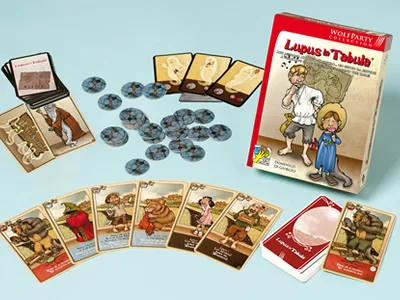
The mood changes as soon as someone asks. One person smiles and volunteers to moderate. Another grows quiet for no apparent reason. The roles have yet to be handed out and already people are watching and suspecting one another. The game begins before anyone explains the rules.
Trace the games many of us know as Mafia and you soon come across The Werewolves of Tabula, originally published as 〈Lupus in Tabula〉. It put a familiar pattern into a box: day follows night, a small group threatens a larger village, and the survivors debate whom to vote out.
An Early Game That Still Feels Immediate
DaVinci Giochi brought the game out in Italy in the early 2000s. It hardly feels dated at the table. What strikes you is how much of the rhythm of later commercial Werewolf games is already here.
The underlying Mafia format predates this boxed game, and Lupus in Tabula is one early commercial reference point for its werewolf branch. There are werewolves and villagers, secret actions at night, and a public debate and elimination by day. Plenty of games have built on that structure.
Among those variations, it remains a point of reference for how the genre works at the table.
Why Adding Roles Changes the Game
The basic Mafia setup can be very simple: there are the Mafia and the townspeople, and much depends on who can speak persuasively or tell a convincing lie. Give people different roles and the character of the discussion changes.
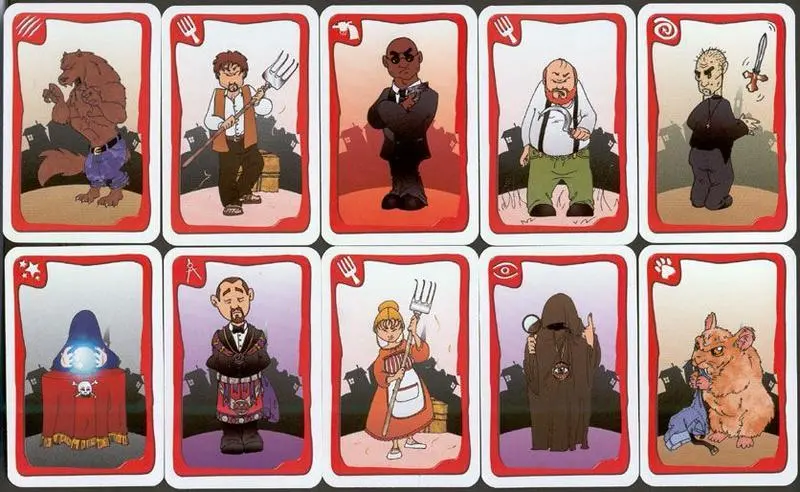
Lupus in Tabula understands that. The seer, medium and bodyguard are more than interesting roles to draw. They change who knows what. Someone may know something and be unable to say how. Someone else has to lie to survive. A player with no special power may be suspected simply because they have little to offer.
The argument turns into a contest in reading people. Knowing when to hold back can matter as much as knowing what to say. The game asks you to make that choice early.
More Players, More Story
It was designed to hold a large group, from eight to twenty-four players. More people might sound like a recipe for confusion, but it gives the village more events to talk about and more stories to tell afterward.
Independent or unusual roles complicate matters further. The werehamster and the possessed, for example, have reasons to act differently from an ordinary villager. Once the question “Are they a werewolf?” stops explaining everything, the mood changes again.
At that point, winning can give way to a different question: how to survive in the role they have been given through one night and one argument at a time.
Why It Still Feels Like a Classic
You can now find Mafia variants in apps, television formats, card games and solo mysteries. Yet when someone asks to play a proper round, they often mean a familiar experience: day and night, a few against many, and suspicion that never quite stops.
Lupus in Tabula presents those ideas without much cushioning. Say the wrong thing and you may be out. Say nothing and people may find that suspicious too. Do the decent thing and it can hurt your chances. Tell a lucky lie and you may get away with it.
It can be unfair at the table. The unpredictable turns are part of what has kept it alive.
Coming Back to the Village
This game will not suit everyone. Speaking in front of a group can be hard, and a heated debate can wear you out. For someone who likes Mafia and enjoys weighing what people say and what they leave unsaid, it is a game worth returning to.
Play it and you may recognise the shape of other Mafia games you remember. A familiar argument, a strangely funny accusation or a vote that made you angry all have a place in this village.
Game Information
Lupus in Tabula
- Players
- 8–24
- Genre
- Party game / Social deduction
- What to expect
- An early boxed Werewolf game with varied roles and competing loyalties
OWL MAGAZINE may earn a commission from purchases made through this Coupang Partners link.