 WALKSCAPE
 Crosswave Edition
Kanimiso, the Richest Bite Inside a Crab
2026-01-27
A Delicacy Inside the Shell
Kanimiso is often translated as “crab miso.” It captures a thread that runs through Japanese cooking: a part of an ingredient that might otherwise be passed over can turn out to be a dish in its own right.
What Is Kanimiso?
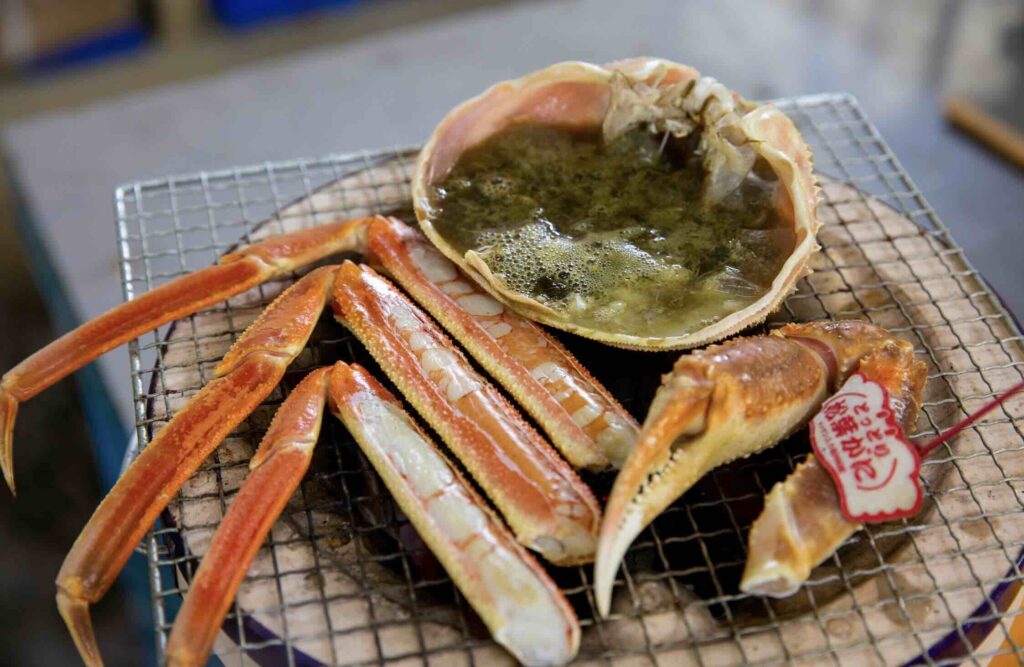
The name refers to the crab’s hepatopancreas, the organ that performs functions comparable to those of a liver and pancreas. It sits inside the shell as a soft, creamy paste. Its colour runs from pale ochre to deep brown, and its savoury richness has a trace of sweetness and a pleasantly bitter finish.
The combination can divide a table. To anyone who takes to it, the flavour is hard to forget. It’s often spoken of as an acquired taste, something to eat slowly with a drink.
From Using the Whole Crab to Serving a Delicacy
The appeal of kanimiso begins with a simple practice: making use of the whole crab. There is good eating inside the shell, and a cook accustomed to getting the most from seafood knows where to look.
What might once have been eaten without ceremony now turns up on its own merits. The distinctive taste earns it a place at izakaya and on some kaiseki menus.
Handling Kanimiso
It takes care to work with kanimiso. The paste is delicate, and opening the shell and lifting it out cleanly is part of the preparation.
A cook can pick it over and add a little sake, mirin or soy sauce to round out the flavour. It may be served as it is, gently warmed or grilled. You can also put it over rice, serve it with sushi or use it as the base for a sauce.
A short turn over charcoal brings out a nutty richness that goes especially well with sake.
A Dish with Its Own Season and Pace
Kanimiso is especially welcome when winter crab is in season. A few bites at a special meal are a way to savour the occasion as well as the ingredient.
A little at a time, with a sip between bites, gives the flavour room to linger. The dish sets its own pace.
What the Ingredient Can Do
Kanimiso shows how far an ingredient can carry a dish when the cook treats each part with care. Modest seasoning and simple presentation leave space for a surprisingly complicated flavour.
Served from the shell or folded into a sauce, it brings a particularly vivid taste of the sea to the table.
One taste tells you something about the dish. It also gives you a sense of what cooks can find in the parts they take the time to keep.