 WALKSCAPE
 Crosswave Edition
What the Stanford Prison Experiment Can Still Teach Us
2026-01-14
Six days in a Stanford basement
In 1971, Stanford psychologist Philip Zimbardo led a study that became known as the Stanford Prison Experiment. Its story later reached a wider audience through The Lucifer Effect, Zimbardo’s account of how ordinary people can do harm under particular conditions.
The team converted a basement into a simulated prison, selected 24 men from more than 70 volunteers and randomly assigned participants to play guards or prisoners. The pool selected for the study and the people present on a given day were different counts.
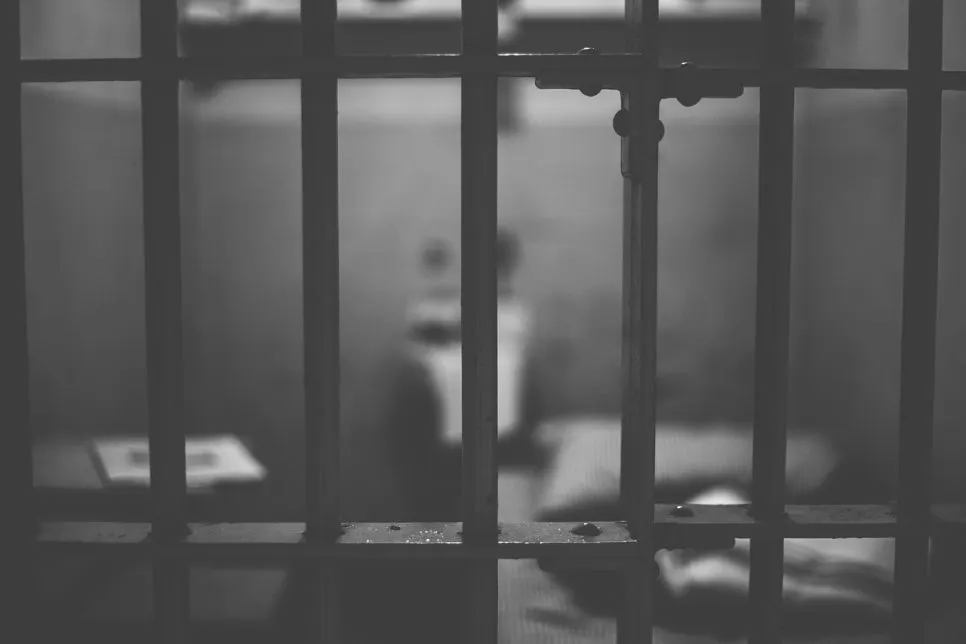
Inside the simulated prison
Palo Alto police helped conduct mock arrests and booking procedures before the participants playing prisoners were brought to the basement. The performance of authority started outside the building.
Some guards subjected prisoners to humiliating routines and verbal abuse. Several prisoners showed signs of distress. What the researchers saw and recorded became the basis of a story about how quickly a simulation could go wrong.
The popular telling treated the escalation as something the roles produced on their own. What the guards were told beforehand is essential to assessing that claim.
The study was planned to run for two weeks. The researchers ended it after six days as the conditions and signs of distress grew more serious.
The interpretation that took hold
The experiment became an illustration of how roles and institutions might influence cruelty. That interpretation reached far beyond the data the researchers had collected.
In Zimbardo’s interpretation, the assigned role, the authority it carried and the setting around it could change what an otherwise ordinary person was willing to do. That made the experiment an unusually vivid illustration of a general claim about situations and behavior.
In the aftermath of the abuse at Abu Ghraib, Zimbardo testified for the defense of one U.S. soldier and pointed to the role of the prison’s power structure and conditions. The comparison shows how far he took his interpretation of Stanford.
What Zimbardo meant by the Lucifer effect
In 2007 Zimbardo published The Lucifer Effect, a book that brought the Stanford study and his account of Abu Ghraib together.
Lucifer, the light-bearer who falls in a familiar religious tradition, gave the book its image of a person capable of doing harm under changed circumstances.
The image raises a question about what people will do under an authority they accept. The Stanford study itself requires a further question about which authority the participants were following.
What the guards were told
Ben Blum’s article “The Lifespan of a Lie” brought renewed attention to the archive and to participants’ accounts of being directed or acting out roles.
The surviving records complicate some of the scenes that gave the study its reputation.
Douglas Korpi, prisoner 8612, later described exaggerating his distress because he wanted to leave. His retrospective account adds a possibility the usual retelling leaves out: a participant might act strategically when the way to withdraw appears unclear. It does not settle what every participant was feeling.
Thibault Le Texier’s archival study documented instructions about how guards should treat prisoners and evidence that staff urged guards to be tougher. Dave Eshelman, whose behavior as a guard was particularly harsh, later described consciously playing a character.
A different prison study
Stephen Reicher and Alex Haslam’s BBC Prison Study reached a different outcome under a different design. The guards did not automatically unite around their assigned role, and prisoners developed a shared identity and resisted. The studies’ investigators later agreed they should be read as distinct demonstrations.
That leaves a question the original setup could not answer cleanly.
How much came from the role, and how much from what the participants believed the researchers wanted?
Three films, three ways of staging the experiment
The films make different choices about what to show when they put the study’s structure on screen.
The 2001 German film Das Experiment borrows the premise for a fictional story. It puts the rapid escalation of authority and violence at the center, using the simulated prison as a setting for a thriller.
The 2010 U.S. remake, The Experiment, uses the same basic premise and pushes the conflict further toward a survival thriller.
The Stanford Prison Experiment, released in 2015, dramatizes the 1971 study itself, following the participants and the research team in the basement.
One of its most revealing choices is to show the researchers getting caught up in the situation they built. That is also a question the archival criticism puts to the real study.
What is worth keeping from the study?
The study survives as part of the history of social psychology and as a case in research ethics. It remains worth asking how power and group roles influence behavior. The question also applies to the researchers who decide what people are told to do.
Where does an individual’s responsibility meet the influence of the situation around them?
Power and group roles can shape judgment and behavior. To see how, we have to pay attention to the way people are recruited, briefed, supervised and allowed to leave.
The experiment remains a starting point for asking those questions, especially about the people who design a situation and claim to be observing it from outside.