 WALKSCAPE
 Crosswave Edition
Broken Windows and New York’s Subway: What the Cleanup Can Explain
2026-01-12
How much can a cleaner subway explain?
In the 1980s, New York’s subway had a reputation for graffiti, fare evasion and violent crime. Riders could see the evidence of neglect in the cars, and the transit police were also dealing with robberies and assaults.
Serious crime fell substantially through the 1990s. The often-repeated story assigns much of the change to restoring order on trains. Crime was still rising around the time the graffiti-removal program was finishing, so the timing deserves a closer look.
The signal a clean train sends
From 1984, the Transit Authority pursued a program to keep cleaned cars free of graffiti. By May 1989 the whole fleet had been brought into the program. Transit police also focused more on fare evasion from 1990.
Fresh graffiti on a car in the clean fleet was removed promptly before it returned to regular service. The campaign altered what riders saw day after day.
Someone is looking after this place.
The appearance of a public place can give clues about how it is used and maintained. Those cues can matter to a rider deciding how comfortable a space feels.
Where “broken windows” came from
James Q. Wilson and George L. Kelling presented the broken windows argument in a 1982 essay in The Atlantic.
They suggested that visible neglect could signal that further disorder would go unchecked. The idea draws attention to what the surroundings tell people is tolerated. It also raises an empirical question: under what conditions do those signals lead to further harm?
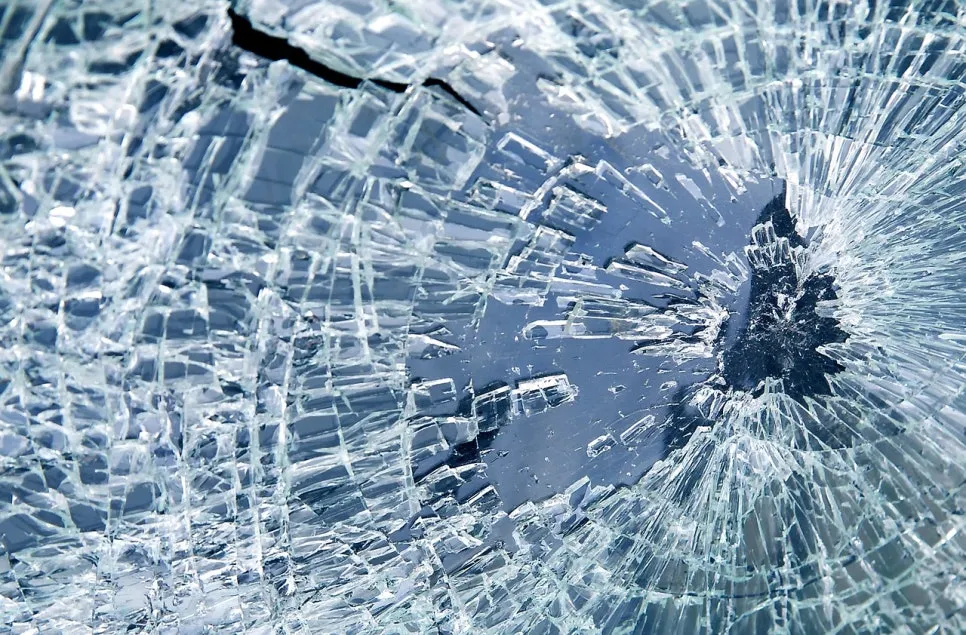
Two apparently abandoned cars
Wilson and Kelling retold a 1969 demonstration by the psychologist Philip Zimbardo. He left one car in the Bronx and another in Palo Alto with license plates removed and hoods raised, making both appear abandoned.
The two cars were treated differently at first.
In their account, the Bronx car was stripped quickly, while the Palo Alto car remained largely untouched for more than a week.
When Zimbardo struck the Palo Alto car with a sledgehammer and left it visibly damaged, others joined in damaging it.
The story illustrates what visible damage can communicate to a passerby. Two cars in different neighborhoods cannot establish how a whole city would respond to a change in policing.
What riders see, and what police record
A train kept clean over time can change what passengers come to expect from that space. Fare enforcement involves a different intervention, with consequences for the people who are stopped.
The subway’s crime decline has often been linked to those interventions. Researchers including Bernard Harcourt and Jens Ludwig found no clear support for a simple disorder-to-crime explanation in their reanalysis of New York City and separate data from a housing experiment.
A street-corner illustration from EBS
The Korean broadcaster EBS illustrated a related idea in The Two Faces of Human Nature. In one segment, the crew left a bag of rubbish at a spot where people already dumped trash and watched more collect. In another setup, it used a planted flower bed. A scene like that can show how differently the same corner can read.
The program also showed an unattended car with a broken window. The visible damage was part of the cue that the car might have been abandoned. These demonstrations give us concrete examples to think with.
Start with the change you can measure
The broken windows idea invites us to look at the place around a behavior. For a public space, that could mean tracking maintenance, whether people feel comfortable using it and whether actual harms change.
The transit story contains several developments that overlapped. The clean-car program, new approaches to fare enforcement and a wider drop in crime all changed the setting. The order in which they happened matters when we ask what led to what.
A small repair can make a public space easier to use.
New York’s subway leaves a practical distinction worth keeping: a visible improvement in the space and a measured reduction in crime are both important, and each needs its own evidence.