 WALKSCAPE
 Crosswave Edition
Black Monday — A Board Game About a Market That Can Turn on You
2025-12-26
Designing the Moment a Market Falls
On Monday, October 19, 1987, the Dow Jones Industrial Average fell 22.6 percent in a single day, its steepest one-day percentage decline. Black Monday remains a shorthand for the fear that a market can come apart faster than its participants can react.
Black Monday is also the name of a card game that brings that fear to a table.
There are shares to trade, but the game is less concerned with teaching anyone to invest than with putting uneven information, manipulation, greed and collapse into a small set of rules.
Playing the Market Itself
Players are part of the market and can move it. Buying and selling shares is only the beginning. Deliberately moving a price up or down is part of how the game works.
Moves that would raise ethical or legal questions in a real market become options the rules explicitly allow. The contest is about who can move the market to their advantage as much as who can pick a stock.
That is what gives Black Monday the feel of a game about the market itself. You are trading inside a system you can change.
Simple Turns, Complicated Consequences
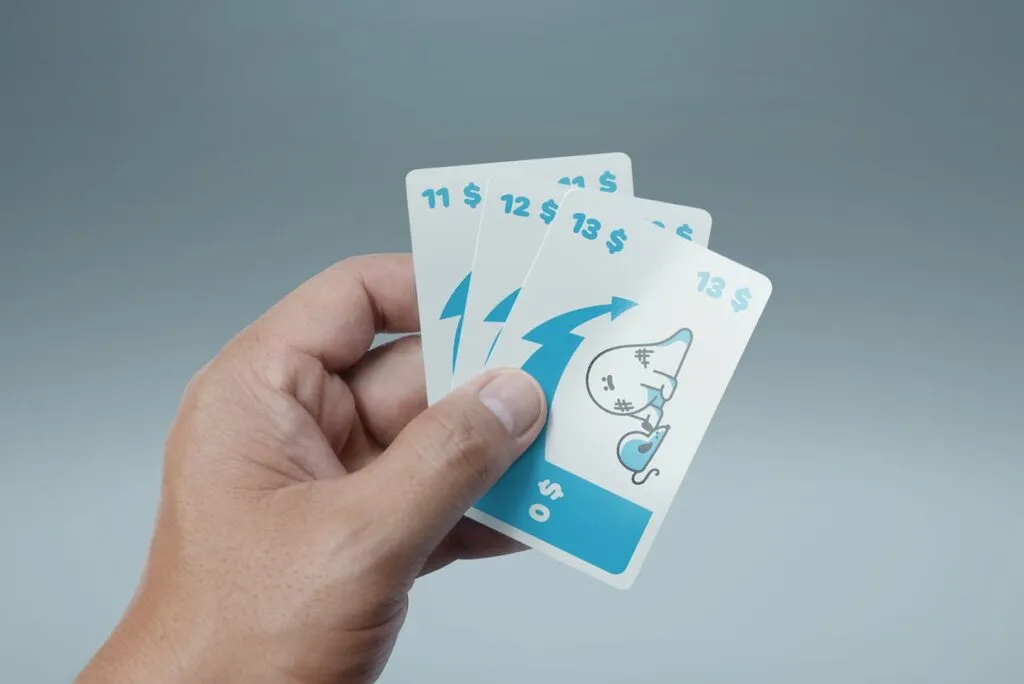
You start with cash and stock cards. On your turn you buy or sell shares and use a card to change a price. You may also be able to change cards and replenish your hand.
The consequences can be disproportionate to the move. A price can rise or fall abruptly. When enough pressure falls on the same stock, it can disappear from the market. Delisting gives you the experience of holding something that becomes worthless in an instant. A promising position can vanish in one turn.
It is a direct way to represent the prospect of collapse, a rare event in real markets that changes everything when it happens.
What Delisting Feels Like
The delisting rule is what sets Black Monday apart from many stock-themed games. If a card takes the price to zero, the stock leaves the market. Anyone holding it has to discard those shares without compensation.
It happens quickly. A stock that looked valuable a moment ago becomes a handful of useless cards. At that point, no position in the game feels entirely safe.
A stock can later return at a new price. The game keeps moving as though the previous price had never existed. It is the speed with which people begin trading again that makes the reset feel familiar.
Competing with Only Part of the Picture
There is little formal cooperation. Everyone moves in their own interest. Players can act together for a while and change sides just as quickly. Prices are visible, but intentions are private.
A rising price can offer an opportunity to one player and leave another exposed. At every turn there is a question:
“Is this rise real, or am I walking into a trap?”
Black Monday gives you no reason to stop asking until the game ends.
“Market Closed” Can Arrive at Any Time
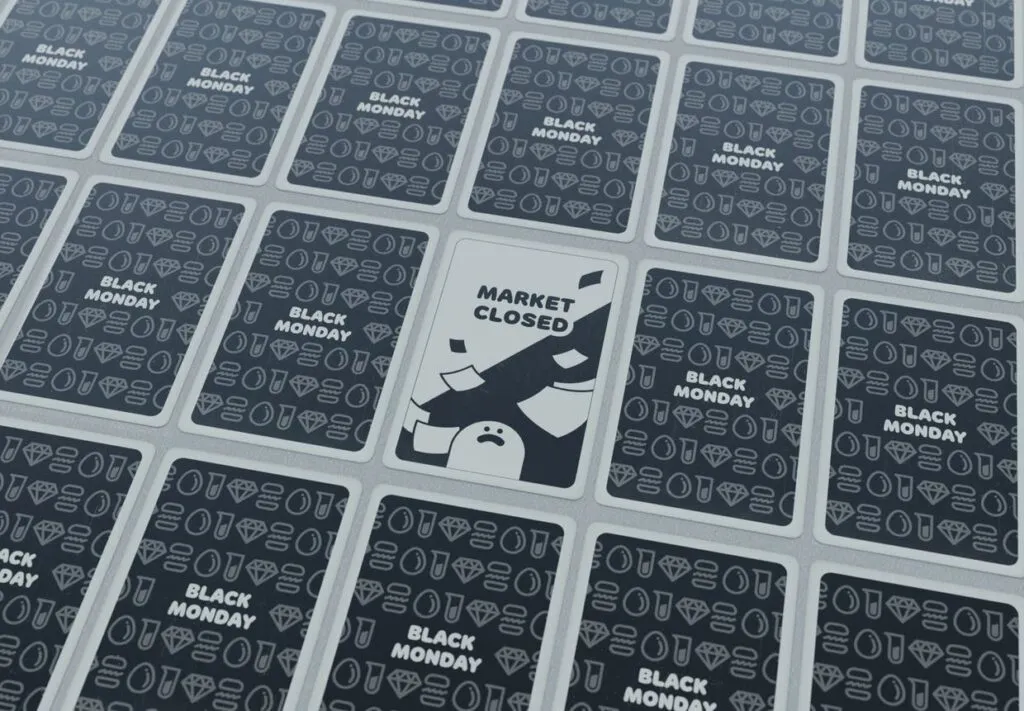
The Market Closed card brings trading to an immediate stop. Whatever you intended to do next no longer matters. The game is scored on what each player holds at that moment.
Because the exact ending is uncertain, you play under the pressure that any decision could be your last. You have to weigh a longer plan against a profit you can take now. Wait for one more turn and the market can close before you act.
That uncertainty is the part that most closely evokes a real market.
The Point Is to Feel the Pressure
Black Monday offers a way to experience how much emotion and incomplete information can shape an investment decision. That is what the game puts in your hands.
A sensible decision can still go badly when other players are moving the price around you. Anxiety, appetite and frustration become part of what you are playing with.
Another Way to Look at a Market
A few numbers and cards make a small model of a much larger system. What I find interesting is what people choose when a market becomes a game and they know their decisions can change its course.
After a round, an actual price chart can look a little different. There are decisions behind its numbers, forces moving it in both directions and the possibility that the market will close before you have done what you planned.
Black Monday makes those ideas tangible in the time it takes to play a few hands.
Game Information
Black Monday
- Product
- Black Monday by Sid Sackson
- Players
- 2–6
- Playing time
- About 45 minutes (publisher estimate)
- Suggested audience
- Published for ages 8 and up; particularly suited to teens and adults who enjoy market games
OWL MAGAZINE may earn a commission from purchases made through the affiliate link in this article.