 WALKSCAPE
 Crosswave Edition
Sungnyemun at Night: The Old South Gate of Seoul
2025-12-21
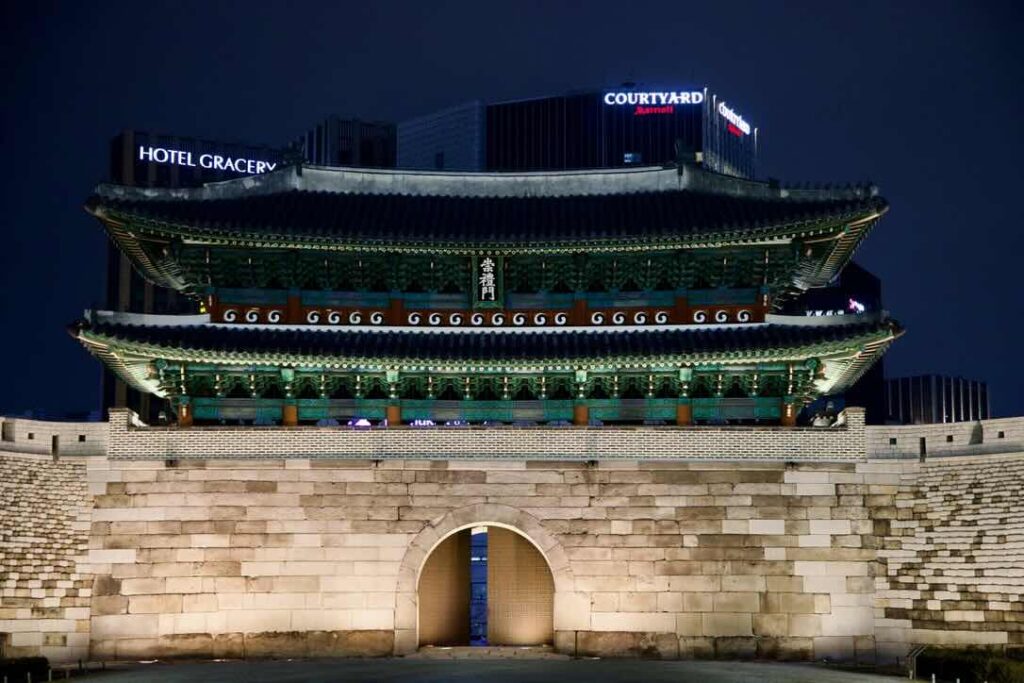
In the middle of Seoul, among the lights of office buildings, the old South Gate keeps its quiet watch. After dark, the lighting brings out the restrained lines of the timber pavilion above the ramparts. The texture of the stonework carries the weight of time. Against the modern skyline, Sungnyemun feels like part of the city’s living history.
The Name Written Vertically
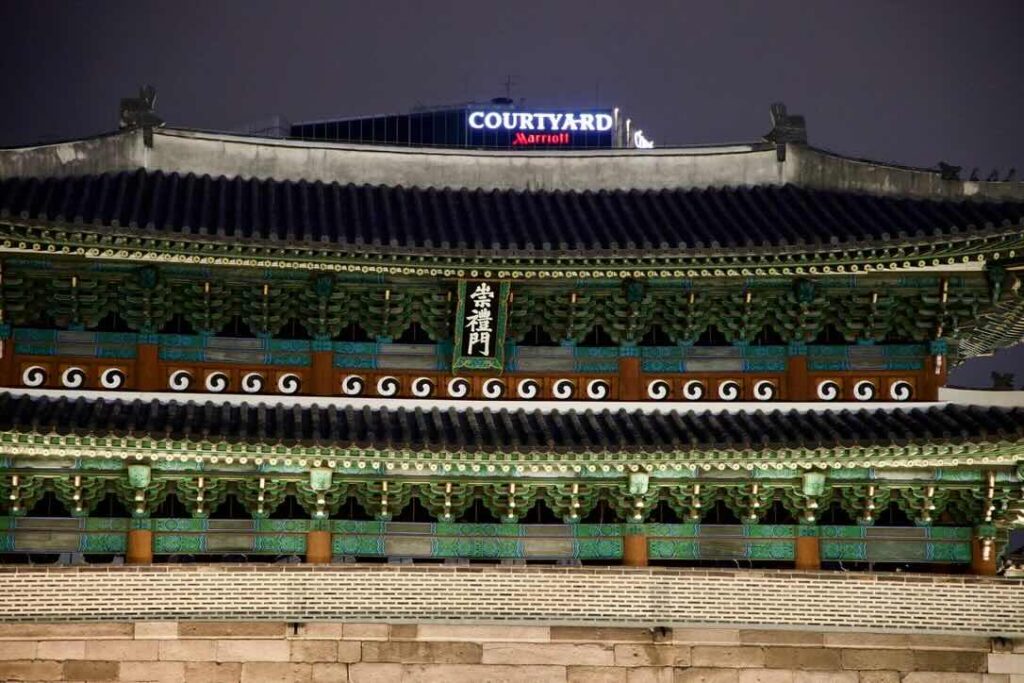
The plaque catches the eye because the Chinese characters 崇禮門 are written vertically. In Joseon palace and city-gate signage, this arrangement could signal the standing of a gate. The strokes are still clear and strong under the night lighting, a reminder of the gate’s place in the life and ceremonies of the capital.
The Years Between the Fire and the Reopening
The 2008 fire caused severe damage to Sungnyemun. The loss of the timber pavilion shocked the country and brought home what it meant to call the gate a national treasure. Its restoration took years. Craftspeople used traditional methods wherever possible, with records and historical research guiding the reconstruction. The gate lit up today carries that history as well.
The South Gate in the Light of Today’s Seoul
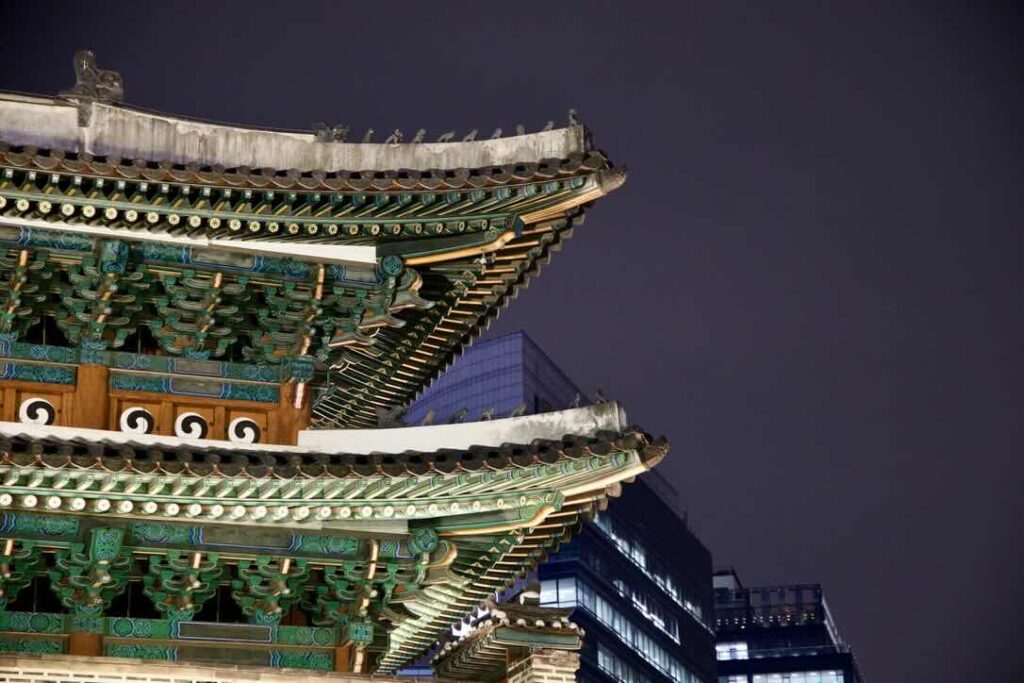
The lights pick out the curve of the eaves and the rhythm of the wooden brackets. Look up from beside the gate and the old structure and the present-day city come into view together. Sungnyemun gives you a reason to stop for a moment in a city that changes quickly.
Sungnyemun no longer serves as a city gate, yet it still suggests where Seoul once began and ended. After the fire and restoration, it also raises a question about how a city holds on to its memory. At night the South Gate offers a quiet answer. Some things can change and still endure.