 WALKSCAPE
 Crosswave Edition
Edamame, from a Summer Beer Snack to a Kitchen Staple
2025-12-21
Edamame often passes for a simple plate of green soybeans or something to eat with beer. That small serving carries a sense of season, a place in Japan’s food history and a role in the way people eat today.
What the Name Edamame Means
In Japanese, edamame is written 枝豆 — “branch” and “bean.” The name refers to young soybeans harvested on the stalk, before they fully mature, while their fragrance and sweetness are still fresh. The name captures something about how they are used. We cook them as a vegetable before they become a dried staple.
A Familiar Part of Summer in Japan
In a Japanese izakaya in summer, it is easy to ask for edamame before opening the menu. Lightly salted pods and a cold beer are a familiar first order when the heat has taken away your appetite.
The way you eat edamame gives the table a rhythm. You press out one bean at a time, talk while your hands keep moving and take longer over the plate than you expected. By the time it is empty, the evening has settled in.
What Is Inside a Green Soybean
Edamame contains protein, fiber, B vitamins, iron and isoflavones. Its tender texture and versatility make it a familiar part of many plant-based meals.
It has also gained attention as a high-protein plant food. Its place at the table has grown from a snack with drinks to an everyday snack and ingredient.
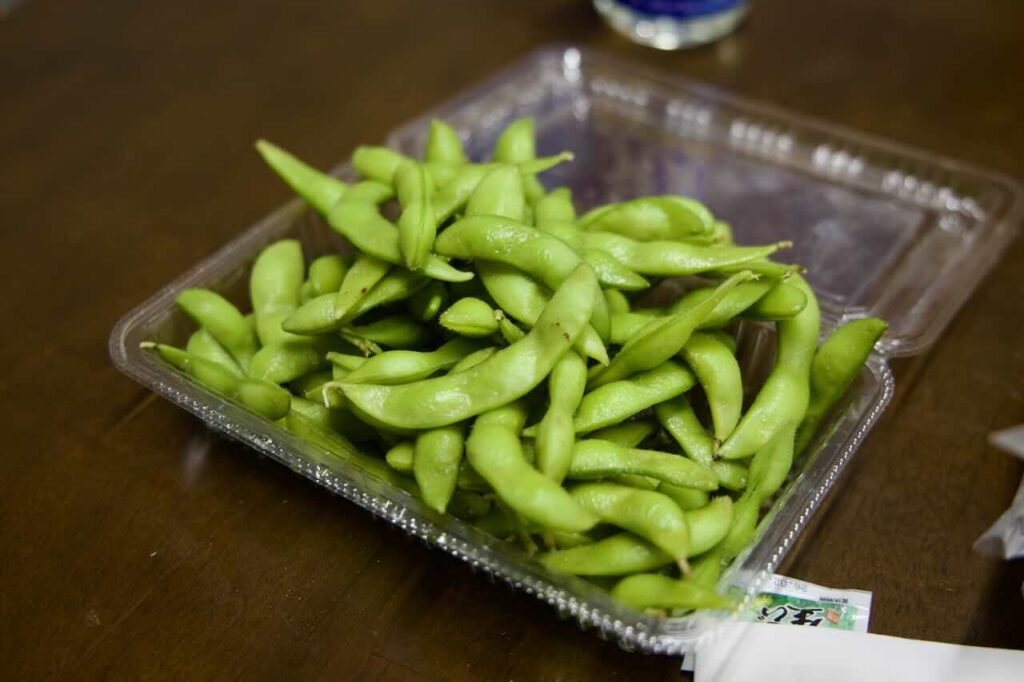
How a Little Salt Brings Out the Flavor
The preparation is simple. Boil the pods briefly in salted water or steam them. Season the cooking water if boiling, avoid overcooking and squeeze the beans out of the pods before eating.
The young beans taste sweet and a little grassy. With so little seasoning, freshness makes most of the difference.
Edamame Travels
Outside Japan, the word edamame appears on menus as it is. The beans turn up in salads and plant-based dishes. A salted plate of pods at an izakaya still has a character of its own. Part of it is the way you eat, and part is the company and atmosphere around the plate.
A Taste That Stays With You
Edamame seldom calls attention to itself. Then one day I remember it before I remember the beer: the salt on my fingertips, the faint sweetness of the beans and what we talked about that evening. It stays with me precisely because it was so ordinary. It is a food I remember.